Rudolph and the Brussels Sprouts
Posted on Wednesday, December 26, 2012 · Leave a Comment
Being a gardener gives me a supply of fresh vegetables, gorgeous flowers and, occasionally, good stories to tell. One of my favorite holiday stories was the time Rudolph and Santa’s reindeer found the Brussels sprouts – on Christmas Eve.
Several years ago I left a couple of Brussels sprouts plants unpicked as we approached Christmas. Given that we’d had a warm fall and early winter that year, I had just never bothered harvesting them. I had a young visitor from Scotland for the holidays that year, and Brussels sprouts are a must in Scotland on Christmas day. But the deer – or, as I told her – the reindeer got them on the night of the 24th. Ah well, Santa’s helpers needed a special treat that night.
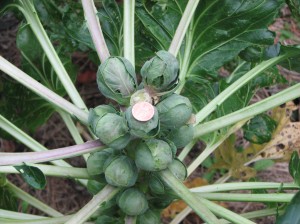
Brussels Sprouts
Even though Brussels sprouts and kale are very cold tolerant, I picked mine well before Christmas this year as there is a four-point buck that has been feeding in my garden. Sigh. And winter is a time when deer predation can be a serious problem for anything edible, including trees and shrubs. What’s a gardener to do?
The best solution is to fence the area where deer are a problem. An eight-foot fence is what most experts recommend. And if there is high “deer pressure” (meaning large numbers and little natural food), a single strand of wire another foot or two above the fence may be required.
Last summer I planted and tended a small vegetable garden for friends who spend their summers in Wales. They’d had trouble with deer in their flower gardens, so I put up a fence when I planted the veggie garden for them. It was just a tiny patch, and I was able to put something up for a very reasonable cost.
Here is what I did: I bought plastic netting of the kind used to cover berry bushes to keep birds from stealing all the fruit. I bought 5 eight-foot bamboo poles, each about an inch in diameter, and a piece of one-inch plastic pipe. At each corner of the garden I pushed a pole into the soil until it was firmly in place. I used plastic tie-wraps to attach the netting to the poles (you could use tape or string for this instead).
Essentially, I wrapped the garden with mesh to keep out the deer, attaching it to each bamboo pole in turn. But after encircling the garden I didn’t attach the mesh to the first pole – if I had, there wouldn’t be any way in. Instead I attached the fencing to a fifth pole, a removable one that was right next to the first one. When I needed to enter, I lifted the fifth pole and moved it away, opening one side of the garden. That side was only 6 or 8 feet wide.
The movable pole was easy to move because it fit into a short section of plastic pipe in the ground. I tied the last bamboo pole to the first pole that was right next to it, and which was firmly anchored in the ground. When I wanted to get in, I moved that 6-foot section of fencing away and dropped the bamboo pole into another short section of plastic pipe that was in the ground at an appropriate distance away. That way I never put the fencing on the ground where it was likely to snag on something.
I have another client with a number of yews (an evergreen shrub) that were formerly the salad bar of the neighborhood deer population – but only in the winter. In summer the deer never bothered the yew. So what did we do? Cover the bushes with burlap. That keeps the deer from eating them, and offers some winter protection from cold winds.
Deer repellents work, too. The one that I like best is called Bobbex. It repels deer with its awful smell. Apply it when stems (and leaves) are dry, and the temperature is above 35 degrees. It has a number of animal proteins derived from eggs, fish and other nasties. The odor is quite offensive, even to us, for the first day or two – but much longer for the deer. They don’t want to eat the plants you have sprayed. I’ve read that the odor evokes fear in them as they approach your yew or rhododendron. It is made from all natural ingredients (no factory-made chemicals) but you should not use it on food products.
Coyote urine is another repellent that I have used, and that has worked for me. Instead of spraying it on like Bobbex, you put it in little plastic bottles that have holes in the upper portions of the sides and cotton balls in the bottom. Add the urine, hang the container on a twig or post, and the odor will drift out, keeping deer away. But it means that coyotes have to be contained in a cement floor cage with a drain to collect their urine, which can’t be a nice life, so I don’t buy it anymore. Some folks hang bars of soap from trees, too, or human hair. Deer get used to these things a bit faster than Bobbex, I believe.
So if you have deer in your neighborhood, get ready for winter. I’m not a hunter but I joke about clobbering deer on the head with a 2-by-4. I’ve seen the buck that ate some of my garden and I ran at it, shouting and barking. But that scares the neighbors, too.
You may reach Henry by email at henry.homeyer@comcast.net. His gardening website is www.gardening-guy.com.
The Winter Landscape
Posted on Wednesday, December 19, 2012 · Leave a Comment
My friend and neighbor, Connie Kousman, is one of the few people I know who likes swamps. She is an avid kayaker who collects cranberries and other plants that do well in wet areas – swamps, ponds and lakes. I called her recently to see if she knew where I could pick some winterberry (Ilex verticillata) for use in vases and on my wreath. I grow winterberry, but this year I didn’t get any of those bright red berries I like so much for decoration. No, Connie allowed that this was a bad year for winterberries – and wild cranberries, too. Some years are like that.
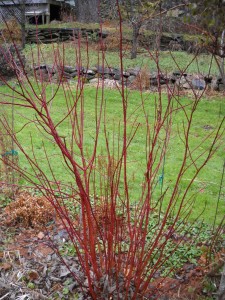
Red Twigged Dogwood
This prompted me to walk around my property looking at my woody shrubs to see what might substitute for winterberries. I didn’t find any berries at all. But I did cut some red-twigged dogwood (Cornus sericea) to use in a vase, and some budded branches of a Merrill magnolia (Magnolia x loebneri). The magnolia buds are a bit like pussywillows on steroids: an inch long and very fuzzy. I have some in a vase on the table, and they look very good, and will for many weeks ahead. I cut some greenery to go with them, a few stems of juniper.
Recently it struck me that winter can be pretty bleak for people who don’t have nice looking winter shrubs and trees. And that judicious pruning can turn a cluster of small river birch, for example, from something akin to an unmade bed into lovely focal point. The trick? Cut off small lower branches that are just clutter, and that can never develop into handsome thick branches. When pruning, I ask myself, what will this little branch, currently the thickness of a finger, look like when it is the thickness of an arm – or a leg. If it is growing sideways toward a walkway, it must come off.
But back to woody plants that look good in winter. Bark is important. I like plants that have exfoliating bark, which means bark that is shaggy and peeling off – thus showing more than one color. My Seven sons Flower Tree (Heptacodium miconioides) is one of those. In addition to the nice bark it offers me a display of small white flowers each fall. White birch (Betula papyrifera) and river birch (Betula nigra) are others with interesting bark. In fact all the birches have handsome bark.
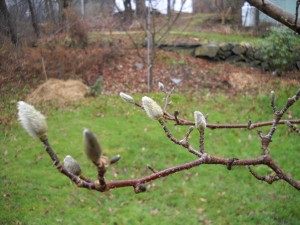
Magnolia Buds
I’ve been growing a paperbark maple (Acer griseum) for about 10 years. It has lovely shaggy reddish-brown bark that is very handsome. It is a very slow-growing tree, at least in this climate. It is listed as a Zone 5 plant (good to minus 20 F) but mine has survived colder temperatures. It looks great in winter.
One of my favorites – but one I do not grow – is sycamore (Platanus occidentalis), which I knew growing up in Connecticut but is rare in New Hampshire where I live. It reminds me of the English plane tree, so common in Europe. The bark peels off in big swaths, showing light gray-green in some areas, dark brown in others.
Of the bigger trees, I like American beech (Fagus sylvatica) for its smooth gray bark. Unfortunately, beeches are prone to a fungal disease that mars the bark and eventually kills the tree.
That same smooth bark is a prominent feature of a shrub known variously as shad bush, serviceberry and Saskatoon bush. All belong to the genus Amelanchier but bear different species names. Most are multi-stemmed bushes that get no more than 10 feet tall, though I have a wild one more than twice that height. You may have noticed that wild ones alongside the road – they are understory plants that are one of the first shrubs to bloom in the spring. Their blossoms are similar to apple blossoms. They do well in partial sun.
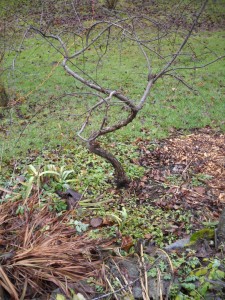
Curly crabapple
Apple trees, particularly crabapples, can look great in winter. Some crabs hold onto their fruit throughout much of the winter, some drop their fruit in fall and many provide fruit for the birds to eat (that disappears before winter is done). Ask at the nursery when you buy a crabapple if the birds like the fruit.
I have a “curly” crabapple, one that was trained at the nursery to have leader that curls around in a gentle swoop. Instead of growing tall, it has been trained to grow in a rough corkscrew. Mine has weeping branches, most of which aim towards the ground, and although I’ve lost track of its name, better nurseries should have it. I got mine at E.C. Brown’s Nursery in Thetford, Vermont.
Last but least are the broad-leafed evergreens: rhododendrons, azaleas and mountain laurels. Their leaves don’t drop off and can look handsome in winter against the snow. The leaves can dry out on sunny days and get very wrinkled, but that does not damage the plants. You can minimize this effect by spraying them with a waxy product known as Wilt-Pruf.
So if your landscape has little to offer you in winter, plan on adding some winter interest come planting time. And if your trees and shrubs are drab, think about adding some strings of little winter lights to brighten them up, at least at night.
Read about Henry’s new children’s book at www.henryhomeyer.com. Write him at P.O. Box 364, Cornish Flat, NH 03746 or e-mail him at henry.homeyer@comcast.net. He is always pleased to hear from you.
Poinsettias, Amaryllis and Paperwhites, Oh My!
Posted on Wednesday, December 12, 2012 · Leave a Comment
I love to grow things. In fact, I will try growing almost anything once. Indoors, outdoors, elegant, clunky, thorny – every plant has its virtues. I even accepted (against my better judgment) a Crown of Thorns plant (Euphorbia Milii) from my friend and fellow writer, Willem Lange. It was, I believe, a plant from his grandmother – and Will is older than I am. So it might be a 100-year old house plant. It does have nice small reddish flowers (it blooms constantly), but it is tall and lanky and covered with dangerous thorns. I keep it on the deck in the summer where leaves and pine needles fall on it – but I’m afraid to go into the interior regions of this plant to clean them up now, as I might need a blood transfusion after doing the job.
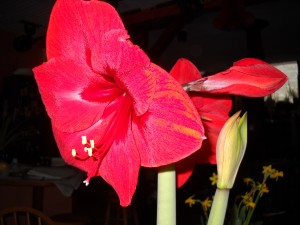
Amaryllis
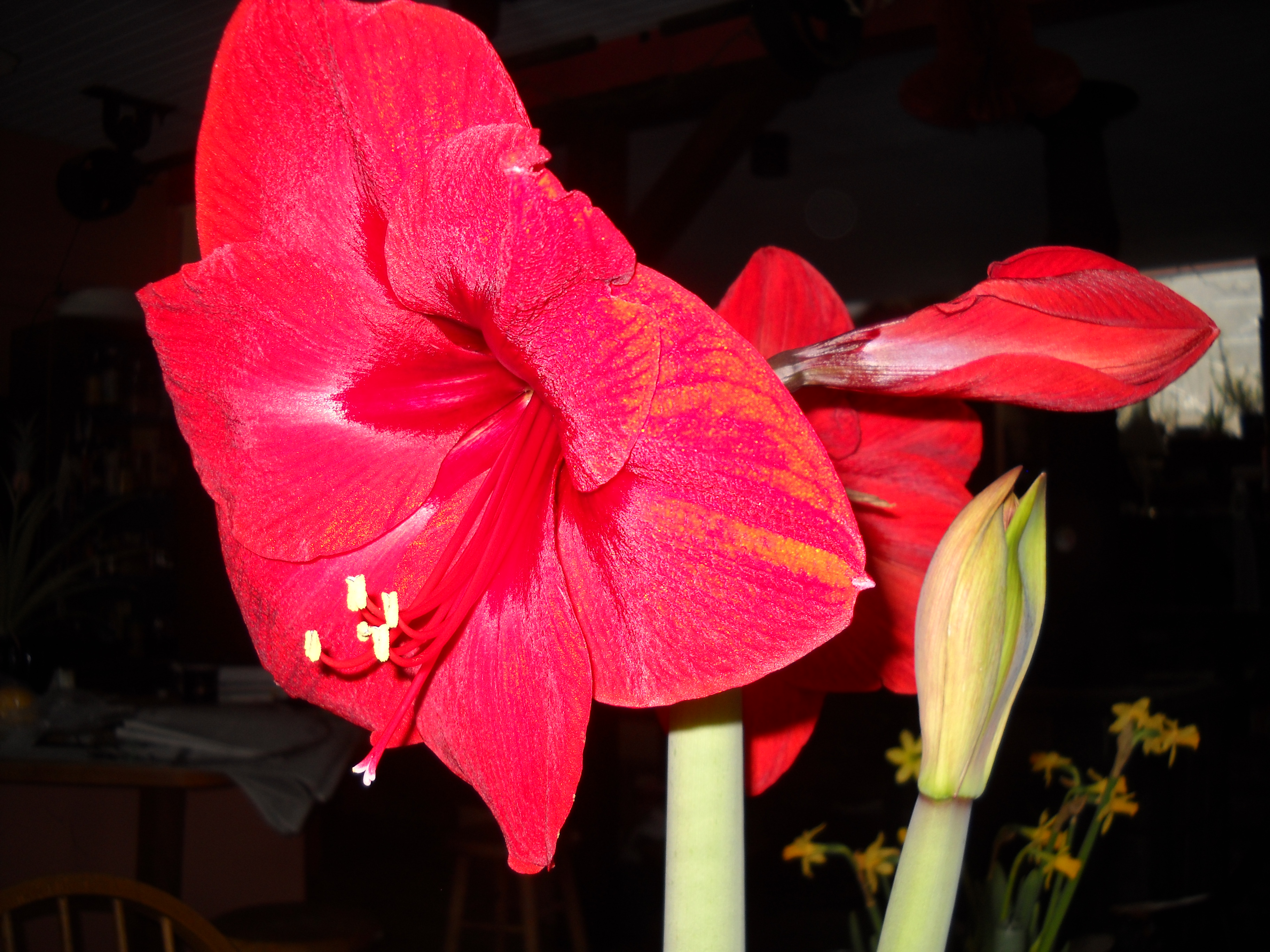
I recently purchased an amaryllis kit at my favorite general store. Amaryllis plants are wonderful: they will produce anywhere from 3 to 9 lovely large lily-like blossoms. They are foolproof if you follow the directions. They come with a soil-like medium, a pot and the bulb. Just hydrate the disk of planting medium (generally coir, a sustainable alternative to peat moss made of shredded coconut fiber) and plant the amaryllis bulb. Half or more of the bulb should be above the soil line in the pot. I like to soak the roots in warm water for 15 minutes before planting to make them more flexible, though the directions don’t tell you to do that. Put on a sunny windowsill and wait. Sometimes an amaryllis bulb will start growing immediately, other times it will sit and sulk for up to a month. (You might want to talk to it, giving it encouraging words if you’re in a hurry). Sometimes it will produce leaves, then flowers – but most commonly the flowers come first. Sometimes you will get just one stalk of flowers, other times 2 or even 3 in sequence. The more you pay for the bulb, generally, the more stems you will get.
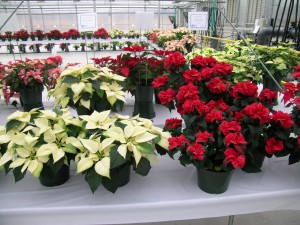
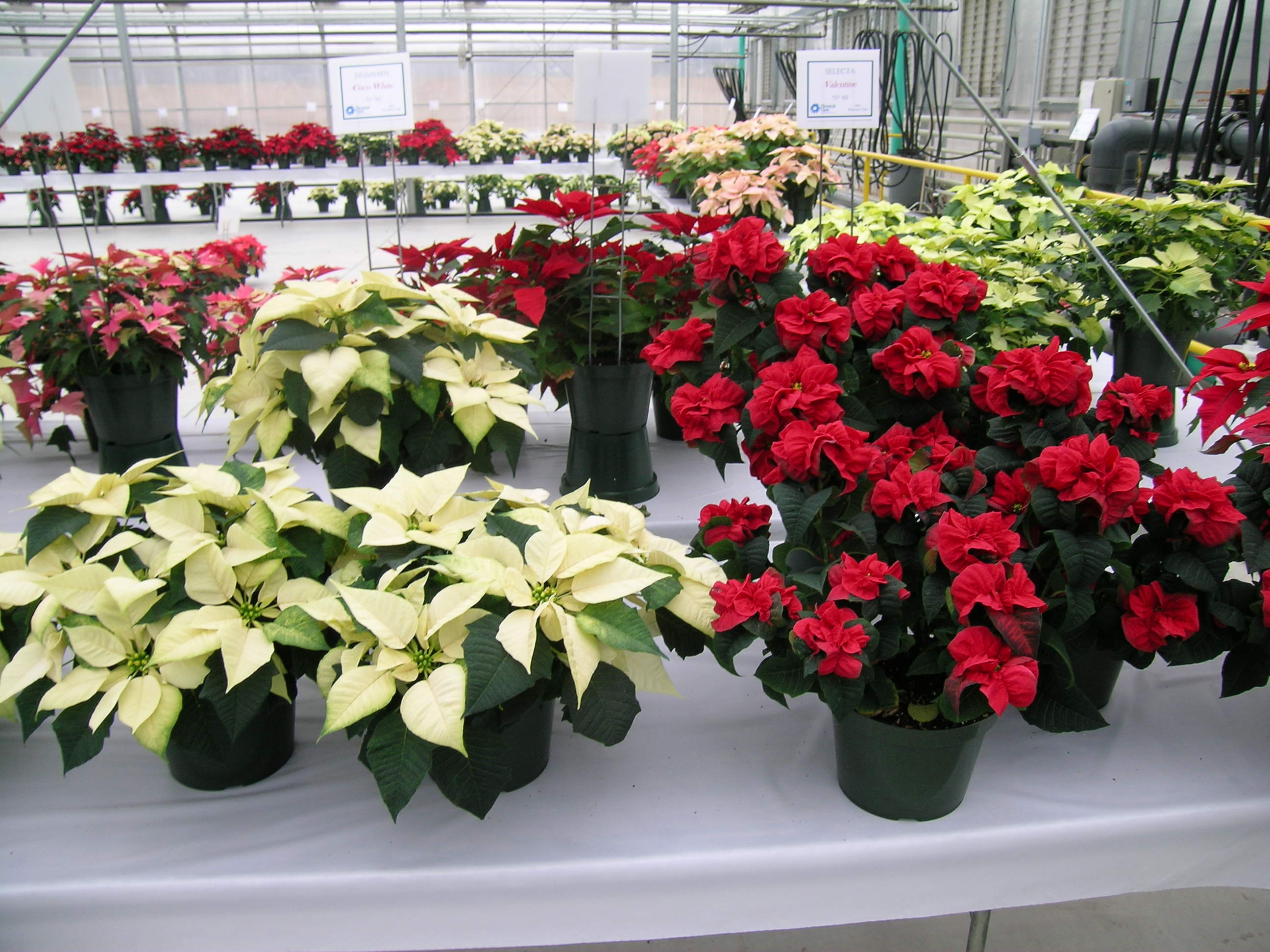
Poinsettias on display at trials
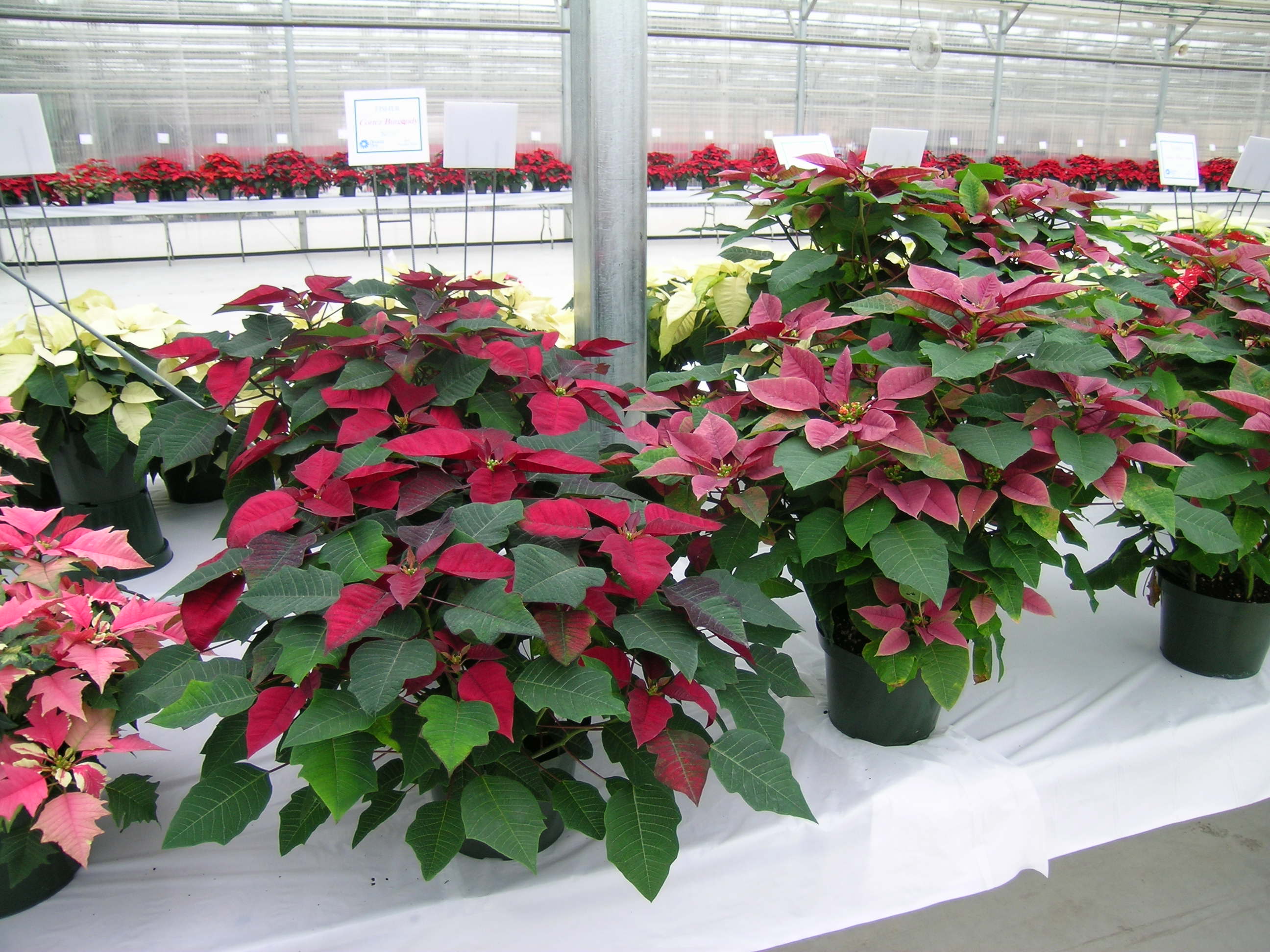
Even easier than amaryllis are poinsettias. Every florist and grocery store has them for sale in full bloom right now, ready to adorn your table. Only the “flowers” are not really flowers. They are modified leaves called bracts, which surround an inconspicuous yellow flower in the middle of each cluster. You can get them in a wide variety of colors and shapes. Red is the classic color, and still my favorite, but they also come in pink, cream, striped, peach, cinnamon and more. The key to happy poinsettias is to avoid overwatering them. Only water when the soil feels dry – and when the pot feels light when you pick it up. They do fine in the interior of the house – they don’t need direct sunlight, which may account, in part, for their popularity. You can save them from year to year but the production of the colorful bracts depends on having days of a certain length, which is best done in a greenhouse. And contrary to popular myth, the plants are not poisonous to cats – a University of Ohio team tested them. Poor test kitties, I’m sure they’re not tasty. (I do wonder how they got the cats to eat the poinsettias).
Paperwhite are another sure winner for the holidays, and a great gift for the gardener. These are generally sold as bulbs, not kits, so you have a little more work to do if you’d like these fragrant white blossoms. And it’s too late to get them blooming by Christmas. They generally take a month or more from planting to blooming (for me, anyway). But I shall buy some today, and get started. Paperwhites are in the narcissus or daffodil family. To get them to bloom you will need a flat, wide dish that is an inch or two deep. Fill the dish with gravel or small stones. And although you can pick stones out of your driveway, white stones are available at garden centers in small bags and look much nicer. Simply arrange the bulbs shoulder-to shoulder in the gravel with at least half the bulb sticking up above the layer stones. Then add water until it just kisses the bottom of the bulbs. Do not, I repeat, do not fill the dish with too much water, as you can rot the bulbs. You may need to tie up your paperwhites to keep them from flopping over when the leaves and flower stems get tall. And rotating the dish every few days keeps them from leaning toward the window grasping for more winter light. Paperwhites produce more than one blossom on each stem, and are really quite elegant. They are not re-useable, however. That’s right. After they bloom just throw them away because they are not hardy in New England.
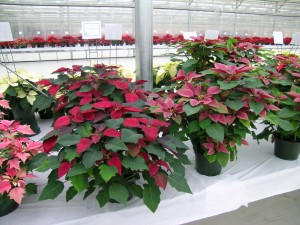
Pointsettias
Winter in New England can be bleak. I buy cut flowers at my local florist to keep on the table to brighten the room and remind me of summer. But a few good plants can tide me over during those times when the flowers I’ve bought have gone by, and before I get the next batch. And as to that Crown of Thorns, writing this column inspired me to work on cleaning it up. I used the vacuum cleaner and it worked!
Visit www.henry.homeyer.com to read about Henry’s new children’s book, Wobar and the Quest for the Magic Calumet. It is a fantasy-adventure chapter book about a boy and a cougar.
Winter: A Time for Reflection and Learning
Posted on Wednesday, December 5, 2012 · Leave a Comment
We had a little snow recently, so it’s starting to feel like winter. I relish winters for many reasons – cross country skiing, Nordic skating and snowshoeing prime among them. But I also love winter because it gives me a chance to slow down a little and sit near the wood stove with a good book. I like looking out on a snowy landscape and reflecting on what I do in the garden and asking myself what I might need to do differently. I grow my plants using all natural ways and avoiding chemicals. Allow me to share my thoughts about why I do.
Ever since Rachel Carson wrote Silent Spring in 1961, gardeners have been aware that applying pesticides to their vegetables might not be a good idea – not for the gardener, not for the environment. But many who avoid pesticides still use chemical fertilizers –even though there are better alternatives.
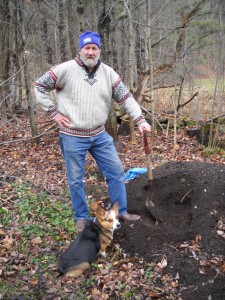
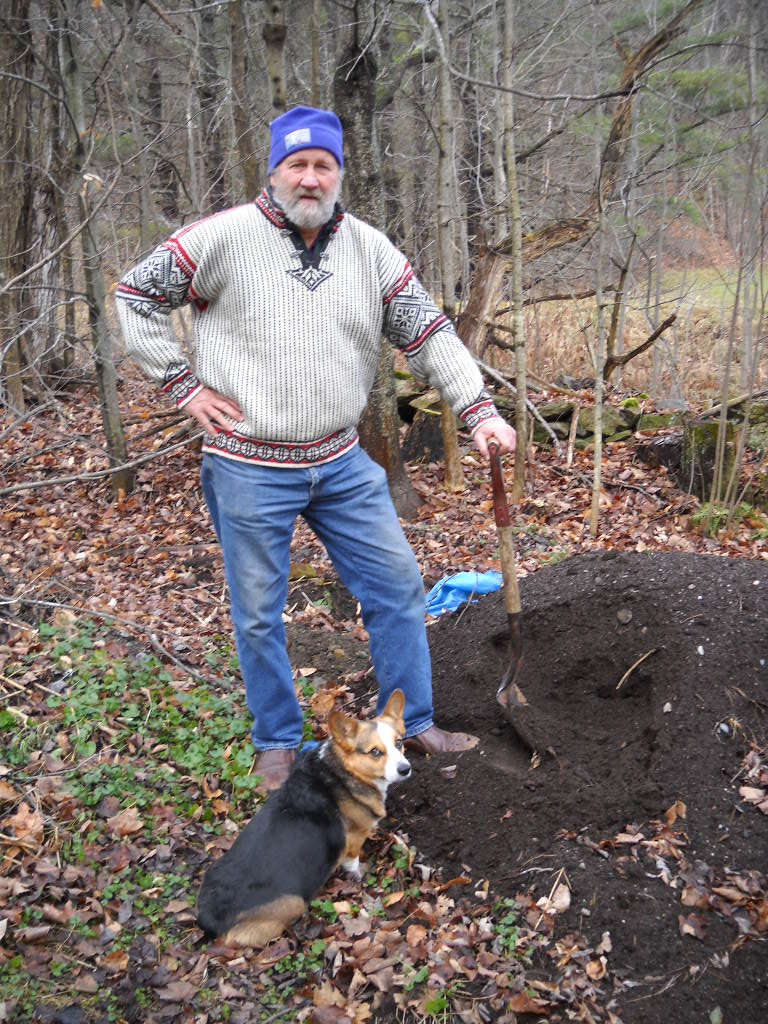
Santa Henry with composted cow manure
Mother Nature has been growing green plants for millions of years. Chemicals used as fertilizers or pesticides have been used for only about 100 years. Plants evolved along with soil bacteria, fungi, earthworms and a variety of other microorganisms that coexist within a mutually beneficial system. A single teaspoon of biologically active compost can contain 5 billion bacteria, 20 million filamentous fungi and a million protozoa.
Gardeners who use chemical fertilizers ignore the benefits of those soil critters, and opt for “feeding” the plant. Organic gardeners nurture the soil and the living things in it, allowing plants and microorganisms to work their wonders as Mother Nature intended.
Plants produce food by photosynthesis, and in good times, healthy plants make more food than they need. They give off some of their excess food, exuding it from their roots and onto their leaf surfaces. This is not wasteful. It’s sharing the food with other organisms that can help them, particularly beneficial fungi. Green plants attract beneficial fungi by sharing carbohydrates with them.
Fungi are better than green plants at extracting minerals from the soil. Neither green plants nor fungi can extract minerals from a grain of sand or a speck of clay. But fungi can produce acids that convert soil components into substances they can use and that are needed by green plants.
Fungi are attracted by the carbohydrates produced by green plants, and develop symbiotic relationships with them. It’s an “I’ll scratch your back, if you scratch mine” arrangement. Does your soil have the necessary microorganisms to work with your plants? If not, you can now buy beneficial fungi to add to your soil: mycorrhizal soil fungi are now being sold and promoted to encourage health in woody plants. Soils in new housing developments or those that have been treated with chemicals may need some help.
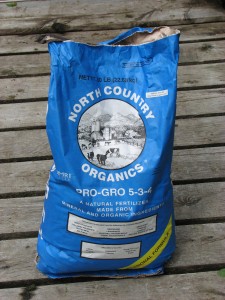
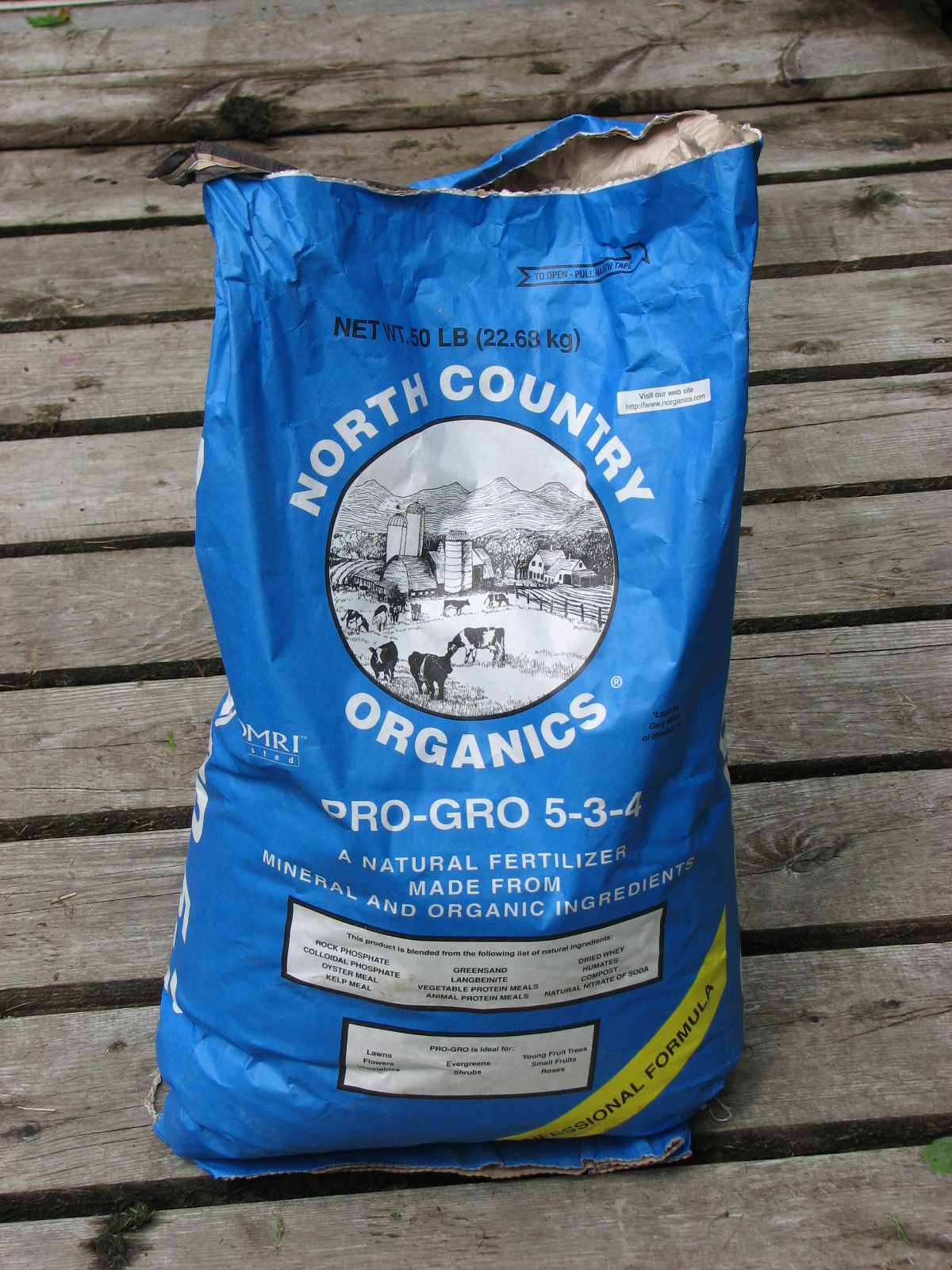
Pro-Gro Organic Fertilizer
The chemicals in a bag of 10-10-10 are not poisonous to you or your plants, they just don’t do much to improve the soil over the long term. Most are water soluble and can be washed away or used up quickly. Not only that, excess soluble fertilizer can inhibit some beneficial soil organisms. Too much nitrogen, for example, can induce nitrogen-fixing bacteria to go dormant.
Bagged organic fertilizers, on the other hand, are much better for your soil and plants than conventional chemical fertilizers. They contain things like seaweed, ground oyster shells, peanut hulls and naturally occurring minerals. They contain many of the micronutrients needed by plants – and missing in chemical fertilizer.
Organic fertilizers, in general, are slow-release fertilizers that provide nutrients over a much longer period of time than chemical fertilizers. And chemical fertilizers only provide 3 of the 16 chemical elements needed by green plants to grow and be healthy. It’s like giving plants white bread with marshmallow fluff – instead of a seven-course French meal.
Yes, a dose of liquid chemical fertilizer can force quick growth, but sometimes that’s not healthy. Scientists have found that excess nitrogen can build up in plants as amino acids. Since amino acids are the building blocks of protein, plants with an excess of them are very attractive to insects. Some pests will feed on over-fertilized plants while avoiding plants nurtured with organic methods. A healthy plant with well balanced growth resists disease better than one with fast weak growth, too.
I feel that it’s important to understand that organic gardening isn’t just about avoiding negative consequences. Organic gardening actually presents many advantages if one understands how plants, microorganisms and soils interact. If you nurture your soil naturally, your gardens will flourish.
But what can you do now? You might even want to order a truckload of composted cow manure for a loved one as a holiday gift. It’s the one time when you’ll get hugs and kisses for giving your sweetie a lot of manure! Enjoy the holidays, but plan on sharing the good times with your soil and plants.
Read about Henry’s new children’s book, Wobar and the Quest for the Magic Calumet at his web site, www.henryhomeyer.com.
Holiday Gifts for the Gardener
Posted on Wednesday, November 28, 2012 · Leave a Comment
When I was a boy we made lots of our own Christmas gifts. I remember making a wooden whale for my dad that held pencils – it had little holes just the diameter of pencils I drilled into it. I must have been 8 or 9 when I made it, and I have no idea how I was able to do it without his help. Maybe it was a Cub Scout project. Not elegant, but there was lots of love in it.
As gardeners, we can make presents, too – if we have extra produce that we have put up. Dried tomatoes, pickles, even a frozen bag of blueberries or elderberries would be much appreciated, I’m sure – though putting frozen berries under the tree might not work well. And then there are heirloom seeds. I grow certain tomatoes and peppers that are not commercially available. I save seeds each year, and share with friends. These are all good presents that cost nothing.
Although seed catalogs used to come in the mail in mid-winter, now most seeds are available on-line before Christmas. A few packages of seeds are nice low-budget gift. I get many of my seeds from Johnny’s Select Seeds in Maine (www.johnnyseeds.com), High Mowing Seeds of Vermont (www.highmowingseeds.com) or Hudson Valley Seed Library (www.seedlibrary.org), which is a non-profit with nice heirloom seeds.
From Johnny’s this year I got two kinds of tomato seeds that are fairly resistant to late blight. First there was the Defiant F-1which produced well early on, but then died off when other fungal diseases took over. Then there was Mountain Magic, a small salad-type tomato that was very disease resistant and productive for me. All of the High Mowing seeds are organic, which I like.
Also in the cheap (or shall we say the ‘frugal’) category is a gift certificate for an hour or two of weeding. That’s a gift anyone would really appreciate. And feel free to send me one! Weeding is a pleasant enough task, but is always more fun if done with a friend.
Holiday Gifts
Before going on to more conventional gardening presents, let me point out that most things I will mention are available locally at your garden center, feed-and-grain or hardware store. I firmly believe that it is better to buy locally than on line, as that keeps our family-owned businesses healthy. And they are the ones that support our teams, schools and charities.
Gardening gloves are always useful. The Atlas Glove company now makes a thin, tough nitrile gardening glove that is sold for under $10. Stretchy nylon coated with waterproof nitrile. Buy them locally, or from Gardener’s Supply Company (www.gardeners.com) in a variety of pretty colors.
Also from Gardener’s Supply is a nice expandable bamboo trellis. A friend gave me one, and I used it for growing my peas. Instead of letting it touch the soil, I tied it onto posts so the bottom was 6 inches off the ground, to minimize rot. Cost? $20-$25, depending on size.
Holiday Gifts
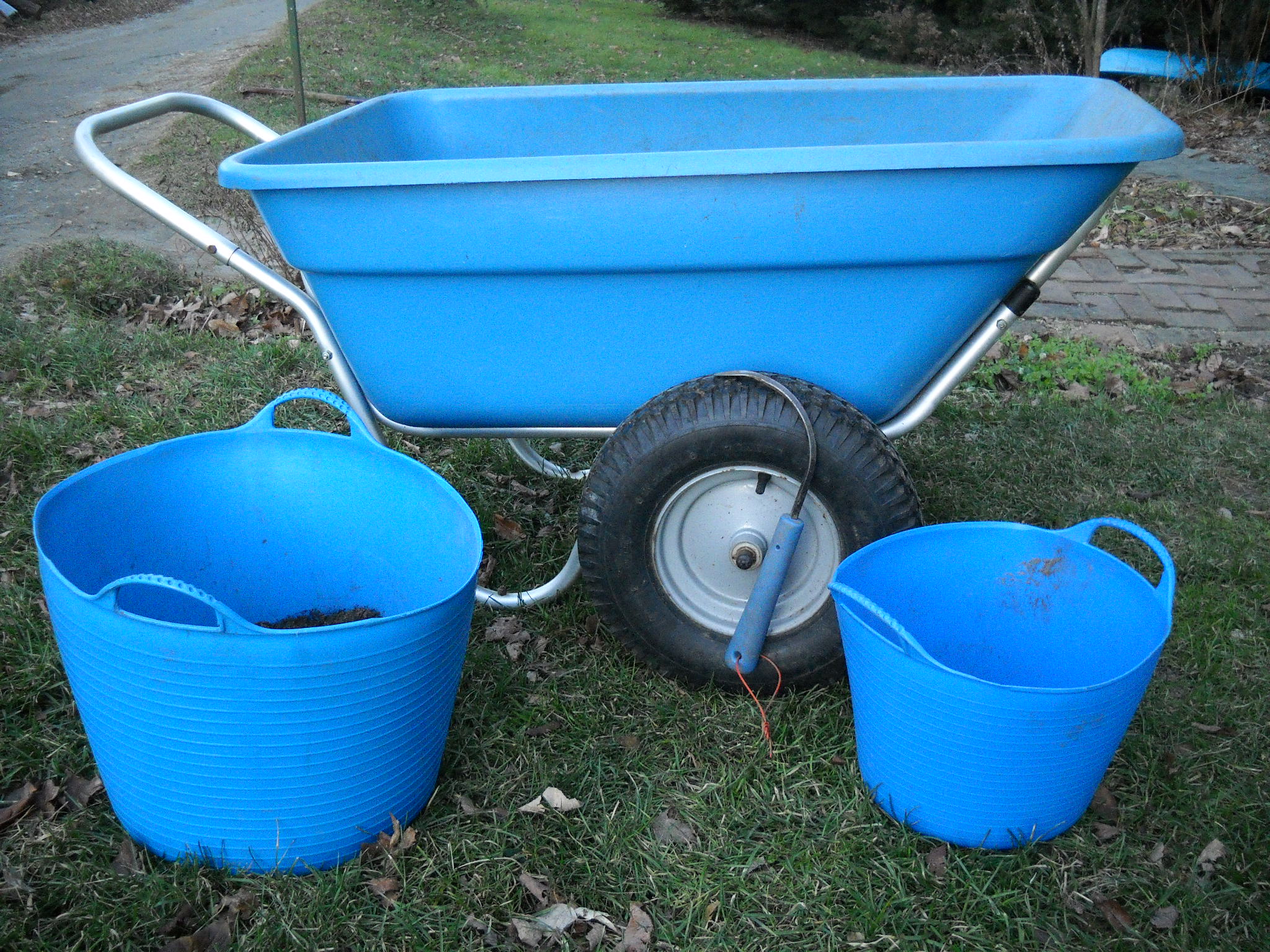
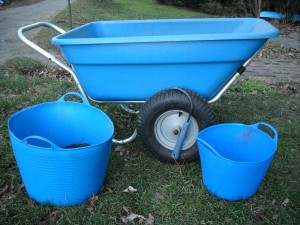
On the high end of the spectrum would be a new wheelbarrow. The best I have found is the Muller’s Smart Cart (www. mullerscarts.com). It is a 7 (or 12) cubic foot polyethylene bin that pops in (or out) of an aluminum frame. I have the 7-ft model and have used it hard to over 10 years, yet have never had a flat tire or any other problem with it. The fact that the barrow part is removable allows me to use it to wash the dog in it or carry manure in the back of my sedan. They cost $350, with free shipping. I chose the wide tires, not the bike tires, and find them great, even in soggy conditions. This is a very high quality wheelbarrow that is rated to carry up to 600 lbs.
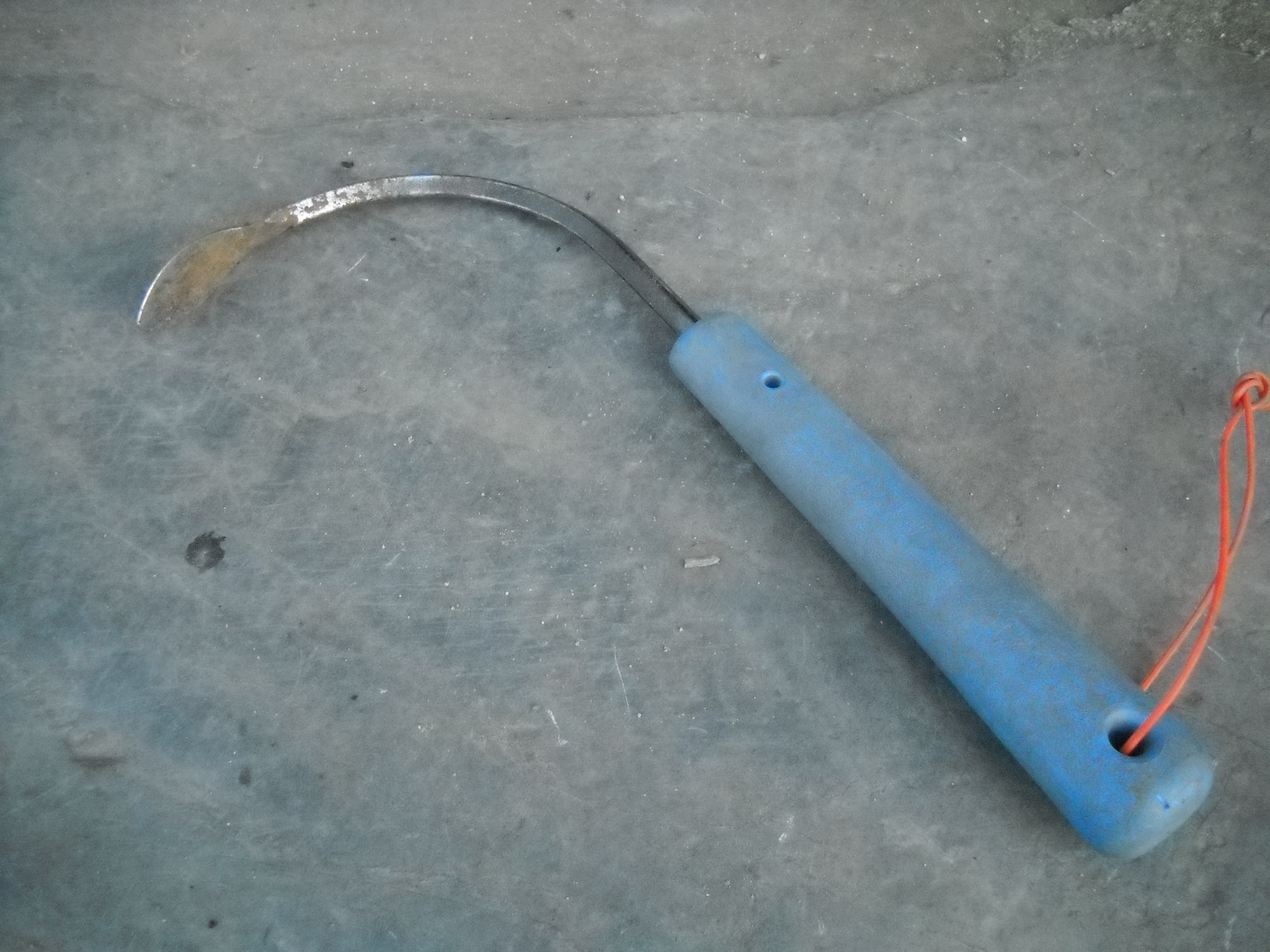
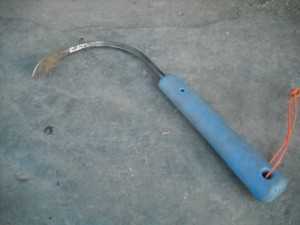
Every year I recommend my favorite weeding tool, the CobraHead weeder (www.CobraHead.com). This tool is great for getting under weeds, teasing out roots, stirring compost or fertilizer into planting holes, planting bulbs and more. You should be able to find it locally. Cost? About $25.
A gardening magazine subscription would be nice, too. I get Fine Gardening magazine (www.finegardening.com). The magazine has a nice balance of growing information and design ideas. Excellent color photography. $29.95.
I’ve fallen in love with TubTrugs. These are brightly colored flexible buckets I use for carrying weeds, compost and even water. From 3 Gallons to 10 gallons, their flexible handles make them easy to carry. Found locally or from Gardeners Supply in a variety of sizes and colors, around $10.
Gardening books are good gifts, but look for quality info, not necessarily glossy pictures. My website, www.Gardening-guy.com, lists about 25 good ones. Just click on the “Gardener’s Basic Library” on the top bar.
So enjoy the holidays, but remember that Santa’s elves make lots of presents. Get creative and be an elf your self!
Henry Homeyer’s new book is for children ages 8 and up. It’s called Wobar and the Quest for the Magic Calumet, and is a fantasy-adventure about a boy with a mustache – and a cougar who is his best friend. Go to www.henryhomeyer.com to learn more.
Slow Food, Local Food, Healthy food for the Holidays
Posted on Wednesday, November 21, 2012 · Leave a Comment
Although I‘ve never seen statistics on how much we eat over the holidays, I’d hazard a guess that Americans eat more per capita from now until the New Year than in any other comparable time period. Family gatherings, office parties and celebrations of all kinds incite us to eat more than is good for us. I’d like to suggest that we all think about offering healthier foods for the holidays, that we slow down and really enjoy the food, and that we try to serve as much local food as possible.
As a gardener, I store and preserve much of my own food for winter. My freezers are full of beans, broccoli, kale, leeks, peas, peppers, tomatoes and more. In cool, dry storage I have winter squash, onions and garlic. In a second fridge I have potatoes, carrots, rutabagas, kohlrabi and beets. In the garden I still am picking Brussels sprouts, carrots, late lettuce and kale. I have homemade pickles in the pantry. If invited to a pot luck dinner, I have plenty to choose from that will make a healthy and tasty dish.
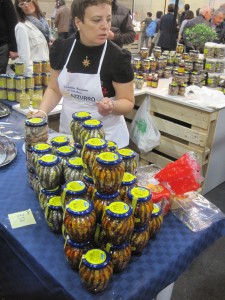
Terra Madre Market
If you haven’t put up food for the winter, think about supporting local farmers. Winter farmers markets are all the rage, and for good reason. I believe that local potatoes and carrots taste better than those shipped to the Mega-Monster Food Emporium at the mall. Yes, they may cost a little more, but not much more. Going local is about a mindset. One must plan ahead and make a commitment to do so – just as most of us have committed to recycling for the good of the planet. Buying local food eliminates all those miles in a diesel-powered refrigerator truck, carrying California to us. And buying local foods supports the farmers in our community.
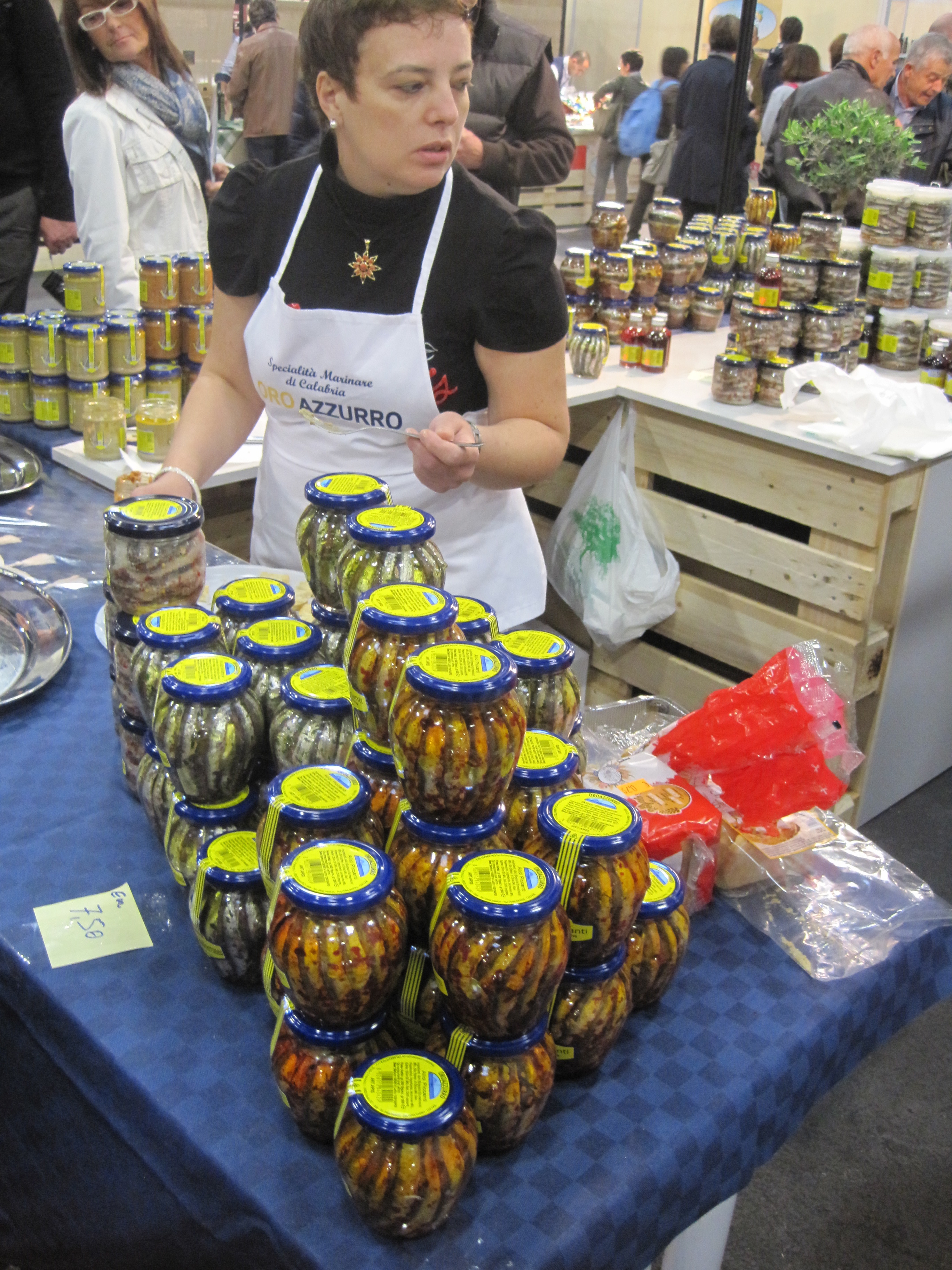
I recently sat down with Robert Meyers, co-owner of Three Tomatoes Trattoria in Lebanon, NH to talk about the Slow Food movement, and about an event called Terra Madre he attended earlier this fall in Turin, Italy. Terra Madre is an event held every other year to allow farmers, consumers, educators and activists from 150 countries to meet, eat and talk together. The Slow Food Movement is an international organization that promotes eating “good, clean, fair” food.
At Terra Madre there are numerous workshops by food producers and cooks. There is second event, Salone del Gusto, held concurrently that allows attendees to sample foods from all over the world. Want to try fried bugs from Burkino Faso? There were representatives there who, if they did not bring bugs this year, advocate for eating local insects. Might be worth trying. Deep fried Japanese beetles anyone?
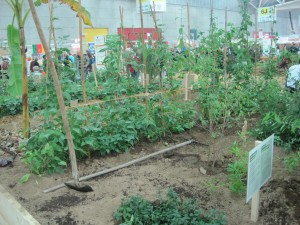
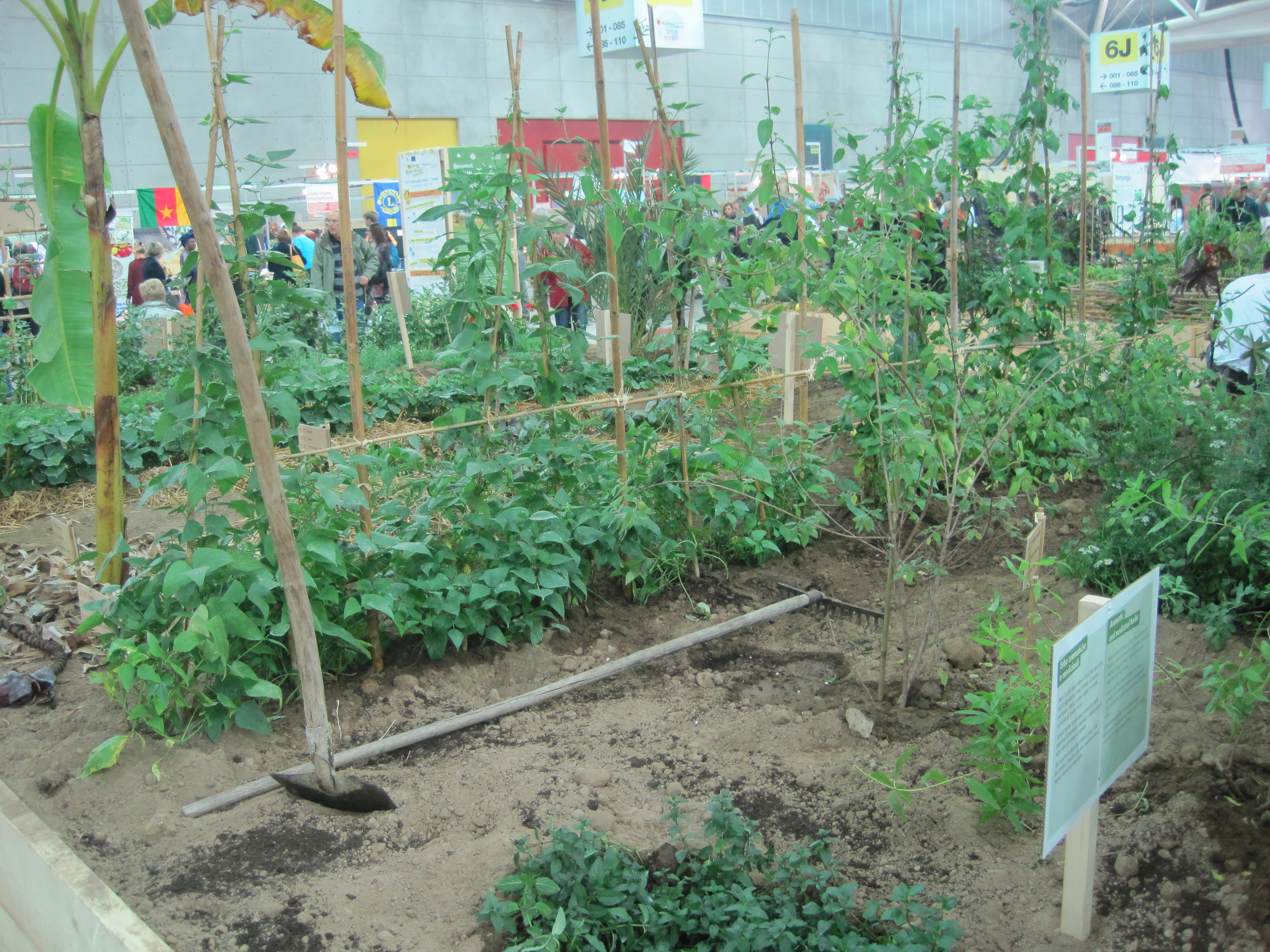
African bean plants at Terra Madre
And to me, the Slow Food movement is about slowing down to really enjoy food, family and friends. It is the opposite of fast food, which we all know about – and which I avoid as much as possible. We gardeners grow our own food – slowly. We should share it, and eat it slowly, too.
So as we head toward the end of the year, what can we do? We can buy fair trade coffee, chocolate and bananas. The Fair Trade label guarantees a minimum fair price to Third World farmers. Most food coops are still selling local produce including potatoes, carrots, onions, beets and much more. The big supermarkets generally don’t bother with local farmers. And instead of bananas and avocados, we can eat local apples and kohlrabi.
We can pay attention to where our meat comes from. I don’t buy meat that was produced in mass quantity on a chicken ranch or cattle feed lot. I don’t want to ingest the hormones and antibiotics that many meat animals are fed. I buy directly from farmers, and I interview them about their techniques raising their animals before I buy. I don’t insist on organic, but I do want humane – and no antibiotics or hormones, thank you.
That means that my Thanksgiving and Christmas turkeys cost me a lot more than frozen supermarket birds, but the difference in flavor is remarkable. Instead of looking only at the price tag, I think about the price per serving. If I am going to feed a dozen people and eat leftovers for days afterwards, the cost per person per meal is very reasonable.
As you plan your garden for 2013, focus on crops you know always do well for you. If you’ve had bad luck with tomatoes recently, think about expanding your plantings of beans or broccoli if you did well with them last year. They are both pretty easy crops to grow, have few pests (at least in my garden) and freeze well. Think about planting and re-planting more lettuce – a crop that does well for most gardeners.
And what about those elusive, blight-plagued tomatoes we all love? There are people who grow them well, generally in plastic high tunnels (greenhouses). Many fungal diseases are soil-borne, and spread when it rains due to splash-up. Some spores are wind-borne; a greenhouse helps to keep them off the plants, too. Maybe we should just buy some of our tomatoes in season from local growers.
So do some planning this winter about what you can realistically expect to be able to grow – and store. Think about letting go of crops that are a frustration – after all, gardening is supposed to be fun. And check out Slow Food International (www.slowfood.com). As they say, it’s an idea, a way of living and a way of eating.
Henry Homeyer has a new children’s book: Wobar and the Quest for the Magic Calumet. For more info go to www.henryhomeyer.com.
Pruning Shrubs and Hardwoods
Posted on Wednesday, November 14, 2012 · Leave a Comment
Winter is upon us. Several nights the temperatures have gone to 20 or colder at my house, and snow is in the forecast. Is it time to hibernate? Not for me, or at least not yet. I still have pruning to do. Pruning of shrubs and hardwoods like maples and oaks is best done after leaf drop when one can really see form and structure without the clutter of leaves.
Early spring blooming shrubs like forsythia, lilac, rhododendron, common ninebark and azaleas have already formed buds for next spring, and pruning will remove some. They are best pruned right after blooming, but if you didn’t do it then, you can do it now – I have been. Most hydrangeas, summersweet clethra and other late-summer bloomers will form buds next spring for blooming later on. To me it is more important to have trees and shrubs that look good all winter than to get every last blossom.
When pruning, remember that trees and shrubs do best when sunshine can reach every leaf. So thinning out branches is generally good. You should remove dead branches, and anything that is rubbing another branch. I like to remove the lower branches of most shrubs, and to take out any sprouts starting up from the roots in the vicinity of main stems. Branches aiming in toward the center of a shrub will just clutter it up, so, as the Red Queen said, “Off with their heads!”
I grow five or more kinds of willows. Willows do best in moist soil and full sun, but are very adaptable and will grow almost anywhere. They grow fast and are interesting, primarily, for their foliage. Only the pussywillow has flowers that matter, those great fuzzy things that sing “Spring is on the way!”
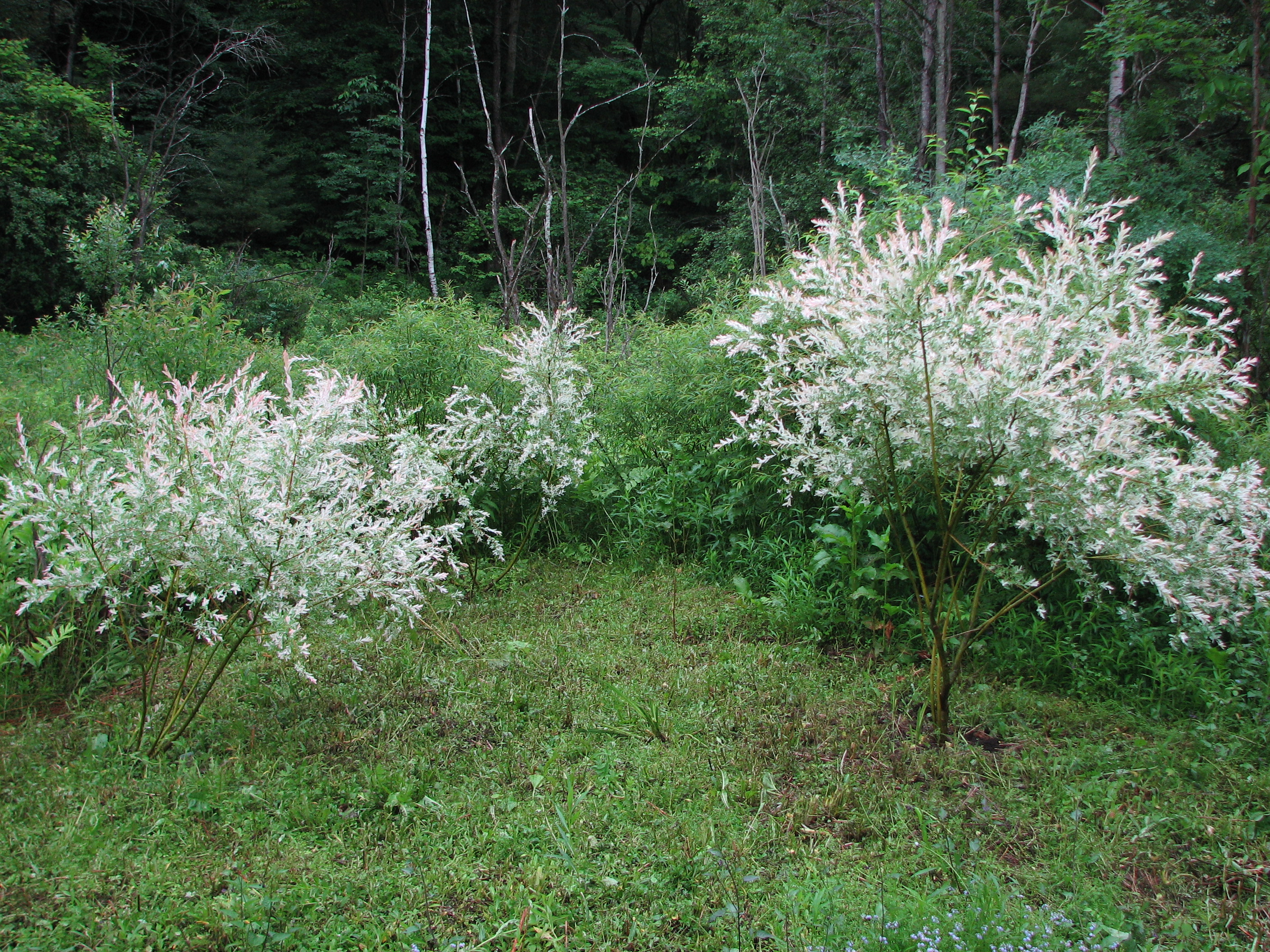
I’ve recently been pruning two kinds of willows: the rosemary willow (Salix elaeagnos) and a Japanese variegated willow, a cultivar of Salix integra called ‘Hakuru Nashiki’. In each case the willows stay shrubby, but tend to get a bit too tall for me. I like to keep them at a height of 8 feet or so, and that requires a trim every year or two. Other forms of willows will develop into trees 30 feet tall or more, such as the weeping willow. Most willows have relatively weak wood, meaning that their branches break easily in wind or ice storms.
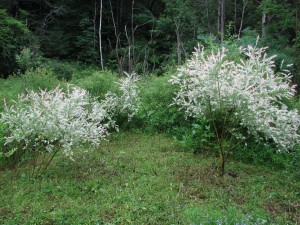
Hakurua Nashiki willows in June
I grow my Hakuru Nashiki willows across the stream from my vegetable garden. A small plant will get to be 10 feet tall in 3 to 5 years. They can have very dense foliage with lots of branches starting near the ground, but I like to see some bare stem, so I prune off all the branches up to a height of 5 feet or so. You could prune them into a lollipop shape by removing all but one stem, and shaping the top into a globe, though I haven’t done that. Not yet, anyway.
By pruning the willows now I am making them pleasing to my eye, but also opening them up so that they will not hold a large snow mass. Any densely-growing shrub will hold snow and is more likely to lose branches if we get a heavy, wet snow.
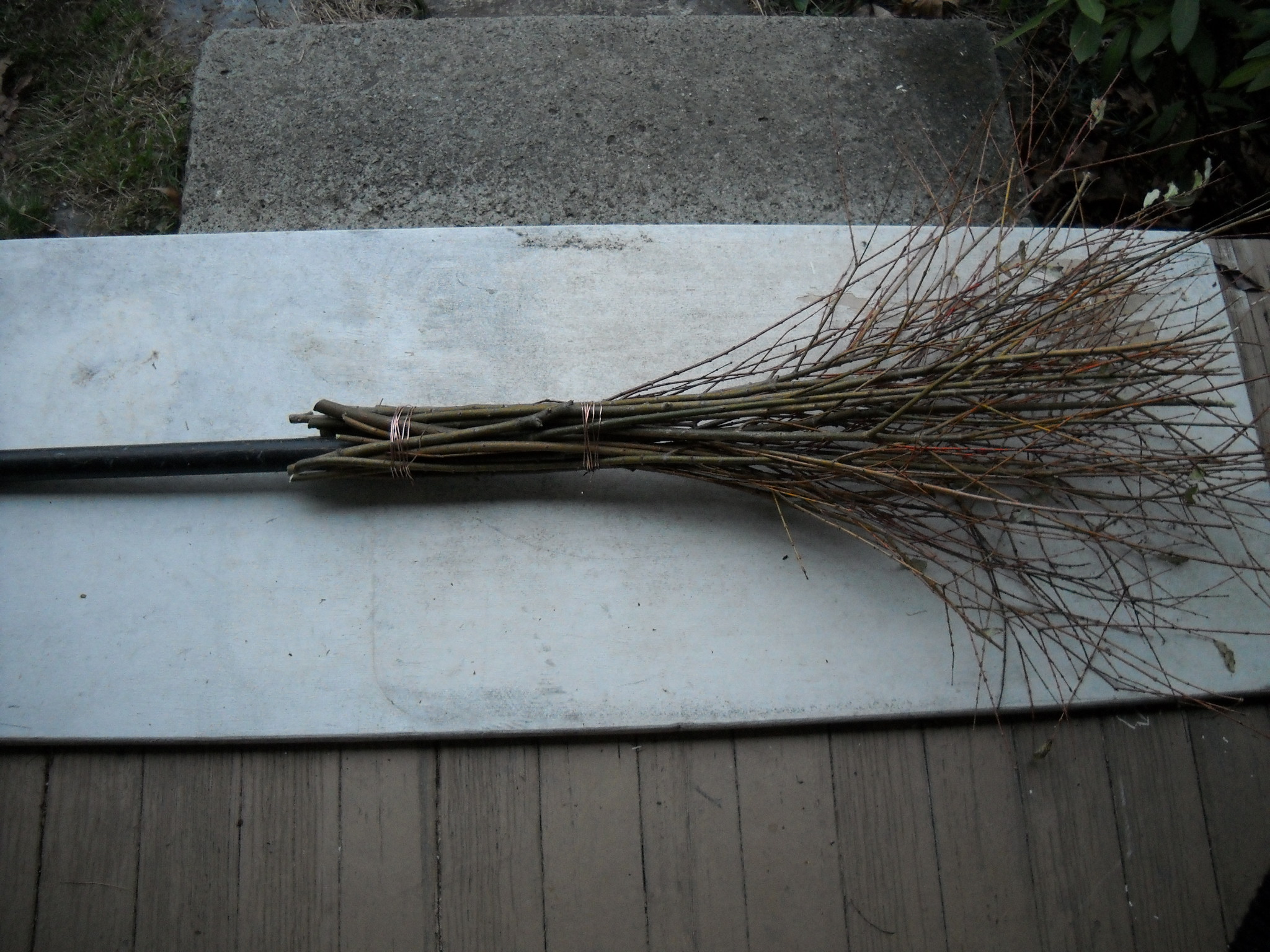
I remember arriving in Sofia, the capital of Bulgaria, on an April day in 1982 that just happened to be a national holiday, the celebration of the Cyrillic alphabet that featured a large parade downtown. Afterwards old women dressed in black came out with twig brooms and swept the streets and sidewalks of every cigarette butt and candy wrapper dropped by the crowds. I liked those brooms – they seemed right out of a fairy tale. This year I decided to use my willow prunings to make my own twig broom.
I had an old broom so cut off the head and re-used the handle, though I could have used a sapling instead. I collected small branches from the pile I had pruned from the willows, each about 30 inches long and about the thickness of a pencil. I arranged them around the handle, overlapping the handle by a foot.
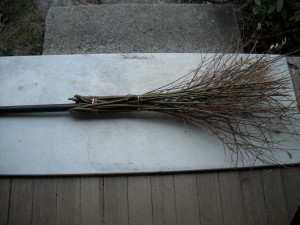
Willow broom
Making a twig broom really is a 2-person project, so I asked Cindy Heath to help me attach the wires. I had bought a small coil of #18 copper wire at the hardware store and cut 2 four-foot sections for fastening the twigs onto the handle. I have large hands, so it wasn’t hard to hold the twigs firmly in place while Cindy wrapped wire around them. When the wire was tightly wrapped 4 or 5 times around the handle, she twisted the two ends together tightly. Then we did it again farther down the handle, near the end of the twigs.
I like the broom for sweeping the front walk- it gets the leaves as well as bits of sand and gravel; so far it seems sturdy and I like the way it looks. So do some pruning, and if you have enough small branches, try making yourself a broom.
Visit Henry’s website (www.henryhomeyer.com) to learn about his new children’s book, Wobar and the Quest for the Magic Calumet.
Uh-Oh: Plant Diseases and Insect Pests on the Horizon
Posted on Monday, November 5, 2012 · Leave a Comment
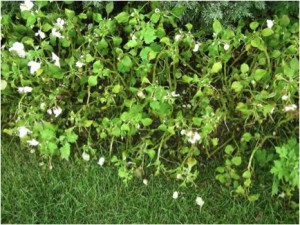
I hate to be a bearer of ill tidings, but I learned recently that one of America’s favorite bedding plants is in trouble. Impatiens is one of those plants that everyone loves: it blooms constantly all summer, it does fine in shady places, and it sheds its flowers after blooming so that you don’t need to take off the spent blossoms. The flowers themselves come in a variety of wonderful colors. There are single and double flower. All in all, a great flower. But some growers and garden centers will not be offering it for sale next summer, or will have reduced offerings.
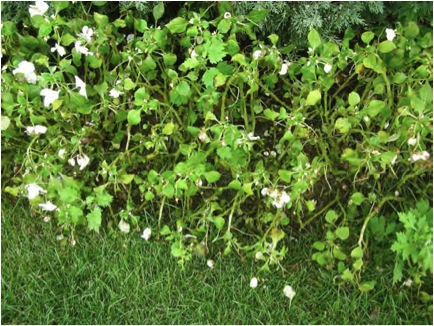
The problem is a fungal disease called impatiens downy mildew. The disease is not new, but its prevalence is. Here in New England the disease has come up from warmer places as spores riding on the wind, much as late blight has come to our tomatoes. The bad news is this: if you had the disease this year you might not have recognized it – I didn’t at first – and once it hits your gardens, it will come back again and again. It seems to survive easily in Zone 5 (minus 20) and may even survive in Zone 4 where temperatures can reach minus 30 F.
For the past few years I have been installing impatiens in a garden on the Mall in Lebanon, NH. The garden is a mixture of sun and shade. The impatiens has done well there – until this year. The season started out well: we planted waves of small plants in berms (mounds of soil) in June. They grew and bloomed. Then the leaves started thinning out, and the plants looked a bit spindly by the end of July. There is serious root competition in these beds, so I attributed the less than stellar growth to the trees sucking up the water and nutrients.
Impatiens Downy Mildew
By the end of the summer the plants were, essentially, bare stems. All the leaves and flowers had fallen off. At first I thought it might be insect damage, or perhaps slugs. But I shrugged and figured that whatever the problem was, fall was just around the corner – and next year we’d do better. I should have sent a sample to the plant diagnostic lab at UNH. Then, recently, I got an email from an alert reader, a grower who had encountered impatiens downy mildew and decided not to grow them again.
I called Dr. Cheryl Smith, UNH Extension Plant Health Specialist (unhpdl.org), who confirmed my suspicions: what I had seen in Lebanon was most likely impatiens downy mildew. I went on the Web and saw pictures and good descriptions of the disease.
Dr. Smith explained that if plants at a location had downy mildew once, it would most likely recur. She suggested carefully cleaning up flower beds that had been infected. Dig the roots out, collect all stems and leaves and bag them. That would minimize the spread of spores. Do not place the plants (or the remains of infected plants) in the compost pile, but put in household trash or burn them. Alternatively, Dr. Smith said you could bury the plants away from the garden in a site that will not be rototilled next spring.
I need to find another plant for those shady beds. New Guinea impatiens is a possible substitute, though more expensive to buy. It is not often sold in 6-packs for covering lots of territory. Coleus and begonias will often grow under the same conditions as impatiens, and are not affected by the disease. But again, they are more expensive.
Also on the horizon is an insect pest that can devastate small berries. When I called Anne Hazelrigg at UVM Cooperative Extension to learn if the problem with impatiens occurred in Vermont last summer (it did), she told me about an insect called the spotted winged drosophila. This is a fruit fly that is a new species, one that has a saw-toothed ovipositor (egg-laying device) that can wipe out fall raspberries, blueberries and even some decorative berries such as those on yews or serviceberries.
Unlike other fruit flies that only eat damaged fruit, this fly can slice open fruit to lay eggs, and the larvae then cause fruit to collapse and the white larvae to make the fruit inedible. Each fly is only about one tenth of an inch long, has red eyes, and the males have a dark spot on each wing. It became a problem first on the West Coast, got to the East Coast in Florida in 2010, and probably rode Hurricane Irene to New England. It is not easily controlled, even for those who use chemicals, and it can reproduce every eight days. There is good information on this pest on the UNH Cooperative Extension website.
Gardening sure does have its challenges. What we really need, I think, is a very cold winter. I once saw a bumper sticker that read, “30 Below Keeps Out the Riff-Raff”. We need 30 below to help control pests and diseases, so let’s hope for a good, cold winter.
Henry’s new book is out! Wobar and the Quest for the Magic Calumet is a children’s fantasy-adventure about a boy and a cougar. See www.henryhomeyer.com for more information.
Forcing Bulbs for Spring
Posted on Wednesday, October 31, 2012 · Leave a Comment
Winters can be hard on many gardeners: short dark days, icy roads and little to do in the garden. Yes, I like to snow shoe and cross country ski, but it doesn’t replace gardening. I water my houseplants (and occasionally talk to them), but they are weak substitutes for the real thing. By the time mud season comes in March, I want blooming flowers to brighten my life.
I get early blossoms in two ways: First, I have early bulb plants outdoors, including hundreds of snowdrops that bloom in March. And second, I force bulbs to bloom early indoors. Now is the time to plant bulbs so that they will bloom when we need them the most – a month or two before they bloom outdoors.
In order to prepare bulbs for early blooming indoors, you will need a place to store them that is cold, but not as cold as the outdoors. Despite global warming, I still see minus 20 every winter, even if for only a few days. Bulbs planted in the ground have some protection against the cold, but if you were to plant bulbs in pots and leave them outside, the extreme temperatures would kill most. Bulbs left in a cool basement or garage will do just fine.
Ideally temperatures for bulbs used for forcing will be between 33 and 50, though a few days of below freezing temperatures is not be a problem (my basement often goes a below freezing). Left in a warm location, the bulbs will grow green tops – but not blossoms.
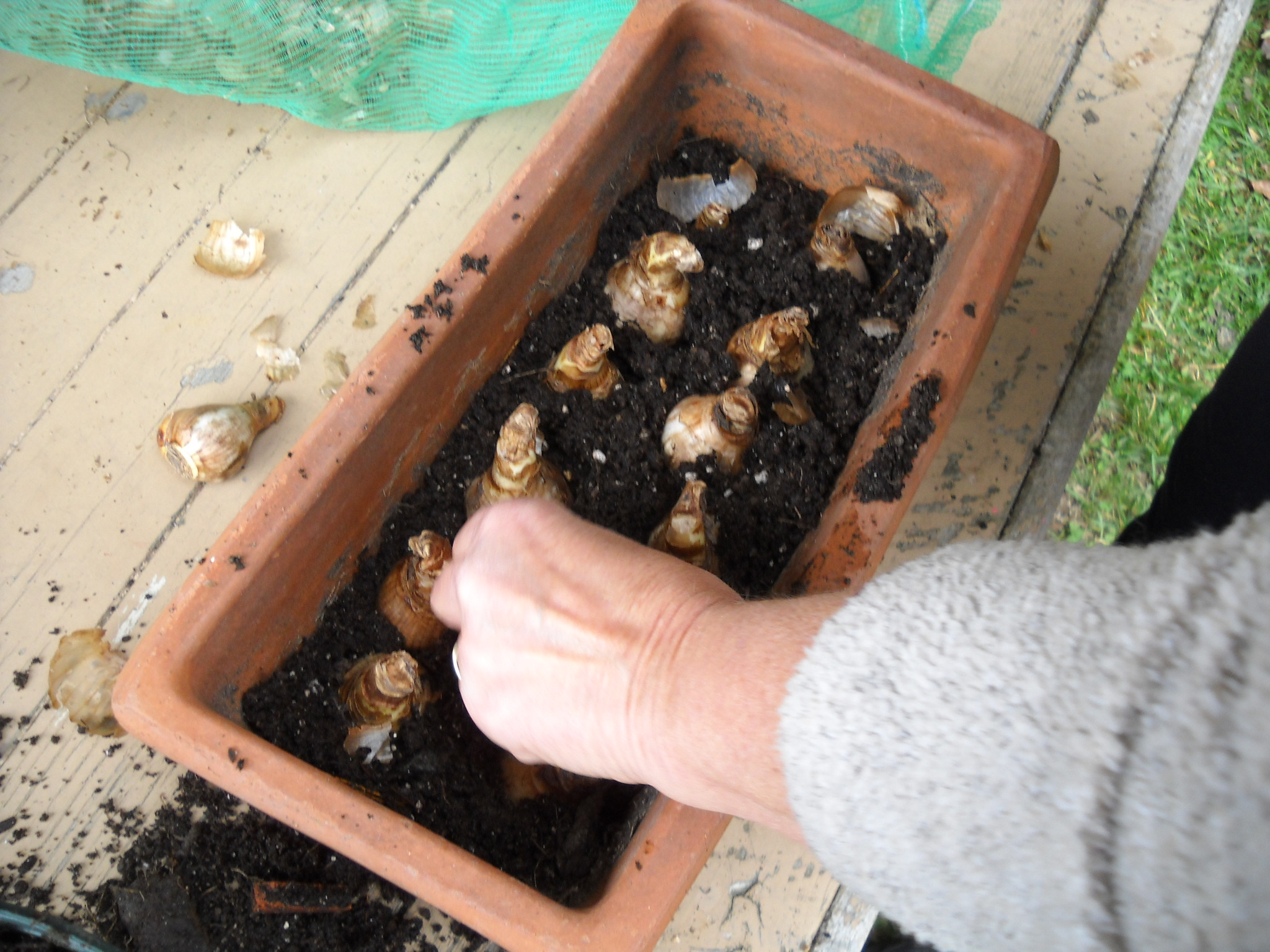
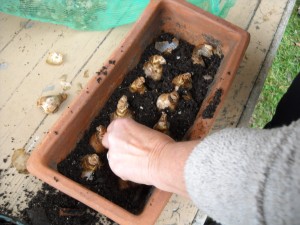
Bulbs can be planted for forcing in pots or window boxes. Good drainage is important to avoid rotting the bulbs, so don’t plant them in ordinary garden soil. I think an ideal mix is one that has half compost and half potting mix. I want the mix to be lightly moist at planting time, but not soggy. Once a month I check the pots to make sure the soil is not bone dry; if it is, I water lightly.
Forcing Bulbs
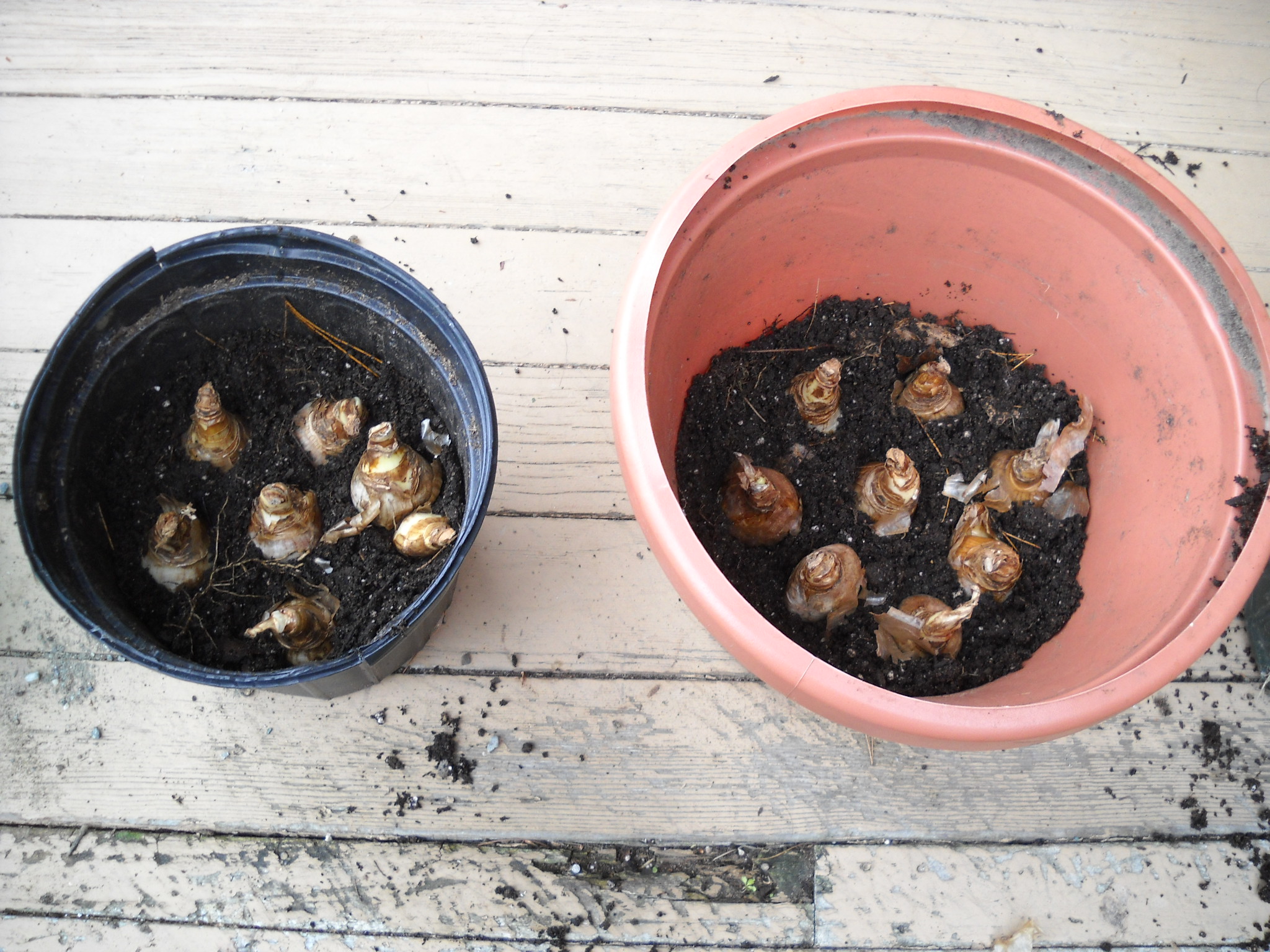
When planting daffodils or tulips outdoors, I plant them 6-8 inches deep but that is not necessary when planting bulbs in pots. Depending on the type of container I use, the pointy tips of my bulbs may be just an inch or two below the soil surface. And I plant them shoulder-to-shoulder, crowding in as many bulbs as possible in the container. After they finish blooming in the spring I will plant the bulbs outside, but for now they have everything they need to bloom inside the house.
Timing is key to success with forced bulbs. Little bulbs like crocus need just 8-10 weeks of dormancy, but daffodils need 12 weeks, and tulips do better with more, up to 16 weeks. Choose bulbs that are marked “Good for Forcing” or that are listed as “early” rather than mid-season or late. If you are selecting bulbs now, make sure that they are still firm, not papery and dried out. And if you see them with long green sprouts, pass them by.
Beware of mice. If you have mice, they will eat your tulips unless you exclude them somehow – with wire mesh screening, for example. Daffodils are lightly poisonous, so mice don’t eat them.
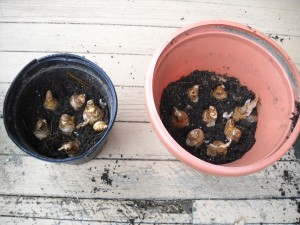
You can maximize blooming by planting two layers of bulbs. I often use those 8-inch pots that perennials come in for forcing. They are not elegant, but can be dressed up with wrapping paper or baskets when displayed on the table. I put in an inch of gravel, an inch or two of soil mix, then daffodils or tulips. I cover them with soil, and then add a second layer of bulbs. The small bulbs like crocus work well for a second layer. Leave a little space at the top of the pot for watering.
Forcing Bulbs
When planting two layers of bulbs I used to worry about the big bulbs coming up and pushing the little ones aside like playground bullies. So I carefully placed the little ones above the spaces between daffodils. I even used broom straws to show me where to plant. But one year I just put them in without worrying about crowding and every bulb did fine. Plants know more than we give them credit for, I think.
When you take your plants out of their cold resting spot, most will begin to grow almost immediately. I generally start mine off in a cool location in the house, and once they have fully woken up I put them on a sunny, warm windowsill. A trick for prolonging their blooms (which also works with cut flowers from the florist) is to move the flowers into a cold mudroom or entryway at night. Cool temperatures prolong the life of your flowers.
So go to your local feed-and-grain store, garden center or food coop; get some bulbs and prepare them for forcing. Come March you’ll be ready for spring, and will have some flowers ready to perform their annual dance before their cousins outside do.
Henry Homeyer has a new children’s chapter book that just came out: Wobar and the Quest for the Magic Calumet. Read about it at www.henryhomeyer.com.
Labyrinths
Posted on Wednesday, October 24, 2012 · Leave a Comment
Despite my jokes to the contrary, I know that you gardeners won’t really turn to a life of crime now that gardening is over for the summer. But you might go into a decline, wasting time watching afternoon television or reading trashy novels. Don’t. Please don’t. There are always possibilities for projects outside, even after flowers and vegetables are through for the season. One such project to consider is building a labyrinth.
Harmony Farm Labyrinth
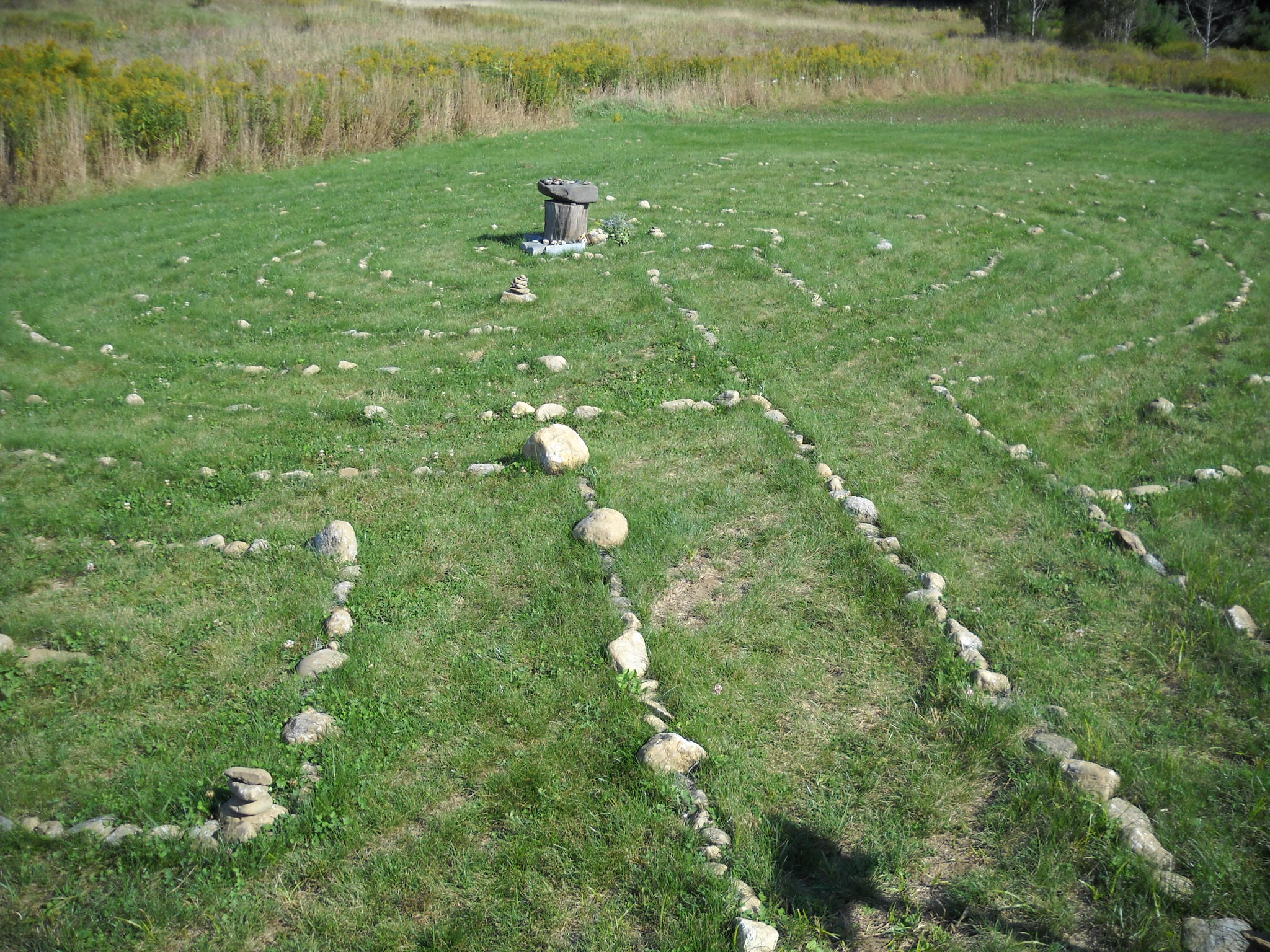
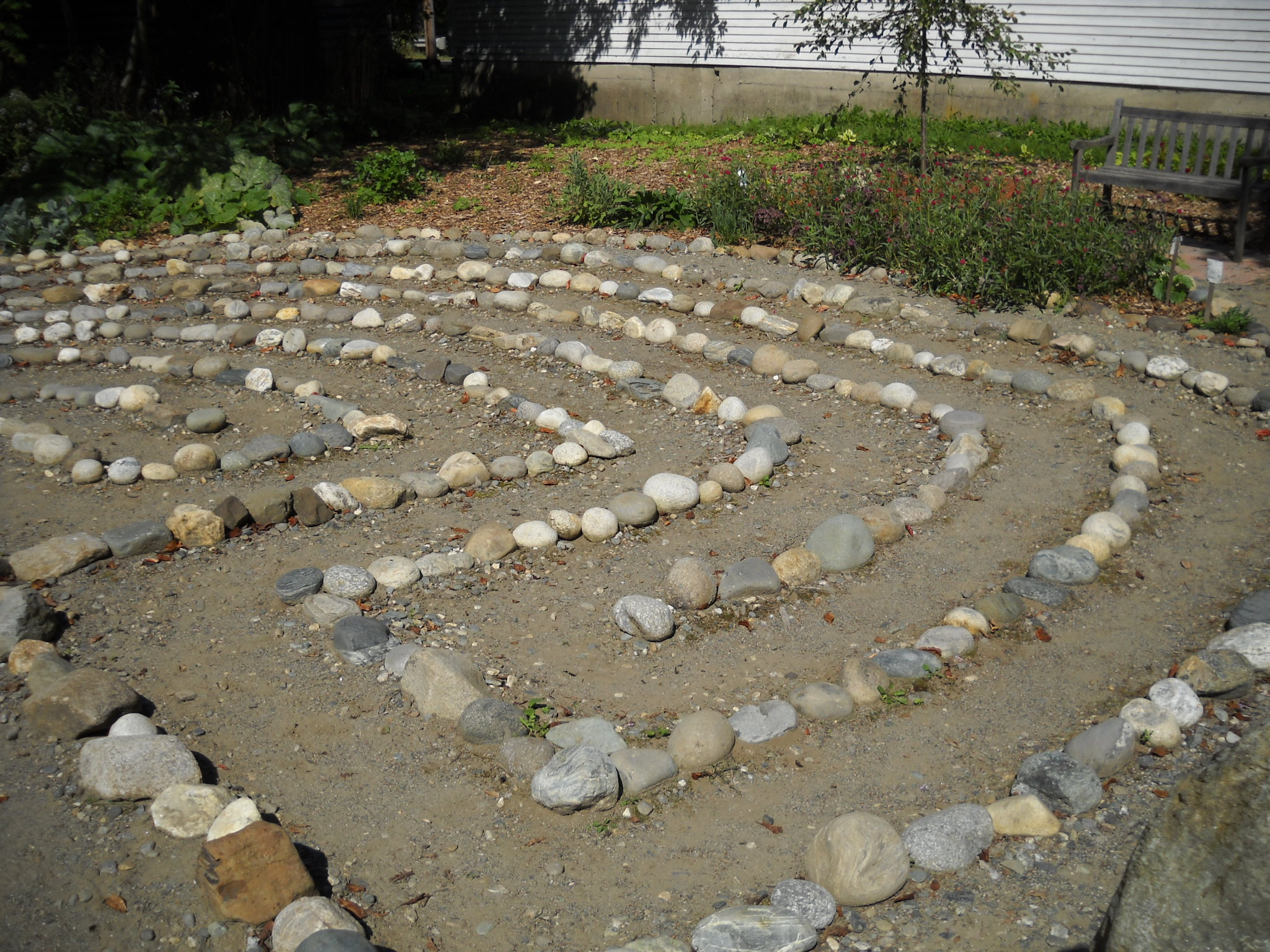
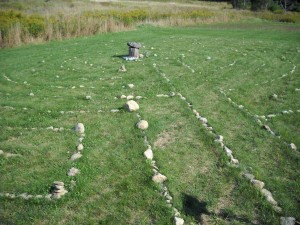
I recently visited a labyrinth at Harmony Farm, a non-profit nature-based education center, open to the public at 28 Bowers Rd, Hartland, VT. (www.harmonyfarmvt.com). They have built a 55- foot diameter labyrinth in memory of Derek Cooper, a young worker at the farm who is now deceased. It is a simple, though time-consuming project that, once completed can be very spiritual in nature.
Labyrinths are sometimes confused with mazes. Both involve walking a path in an area usually defined by a circle. But a maze is a puzzle with many choices about which way to go. A labyrinth has no choices. The pathway winds around, turns corners, and seems to go to the center of the labyrinth – only to turn and lead back to the outside. Eventually you reach the center after walking every step of 7 or more concentric circles.

Labyrinth
History is unclear about the origin of labyrinths. Labyrinths appeared in Crete and Egypt over 2,000 years ago. They were introduced inside Catholic cathedrals in Italy in the 12th century and in France in the 13th. Worshippers walked them as a way of calming the mind and becoming at one with God. Some crawled on their knees while praying. Some walked labyrinths instead of going on a pilgrimage. Famous labyrinths are at the Cathedrals in Chartres, Reims and Amiens in northern France, but now they can be seen outdoors all over the world.
Knox Johnson, one of a family of farmers and gardeners living and working at Harmony Farm, introduced me to their labyrinth and explained how it was created. The first step in creating a labyrinth was to find a relatively open, flat space for it. Barbara Johnson recommends getting someone to dowse the site to find just the right spot, using either crystal dowsing, or rods.
Once the spot was identified, Knox tilled the soil late in the summer of 2011. He allowed the weeds and wild grasses to come back for a few weeks and then tilled it again, getting rid of most of them. He added lime to improve the soil pH. He raked the area, smoothing out the surface and finally seeded it with a seed mix called “Eco Blend with Clover” from North Country Organics (www.norganics.com).
Clover is good in a seed mix because clover plants fix nitrogen from the air, turning it into useful nitrogen and enriching the soil. Unfortunately, many seed companies no longer include clover seed in their mixes because “weed-n-feed” treatments have herbicides that kill clover. So clover has been declared a weed.
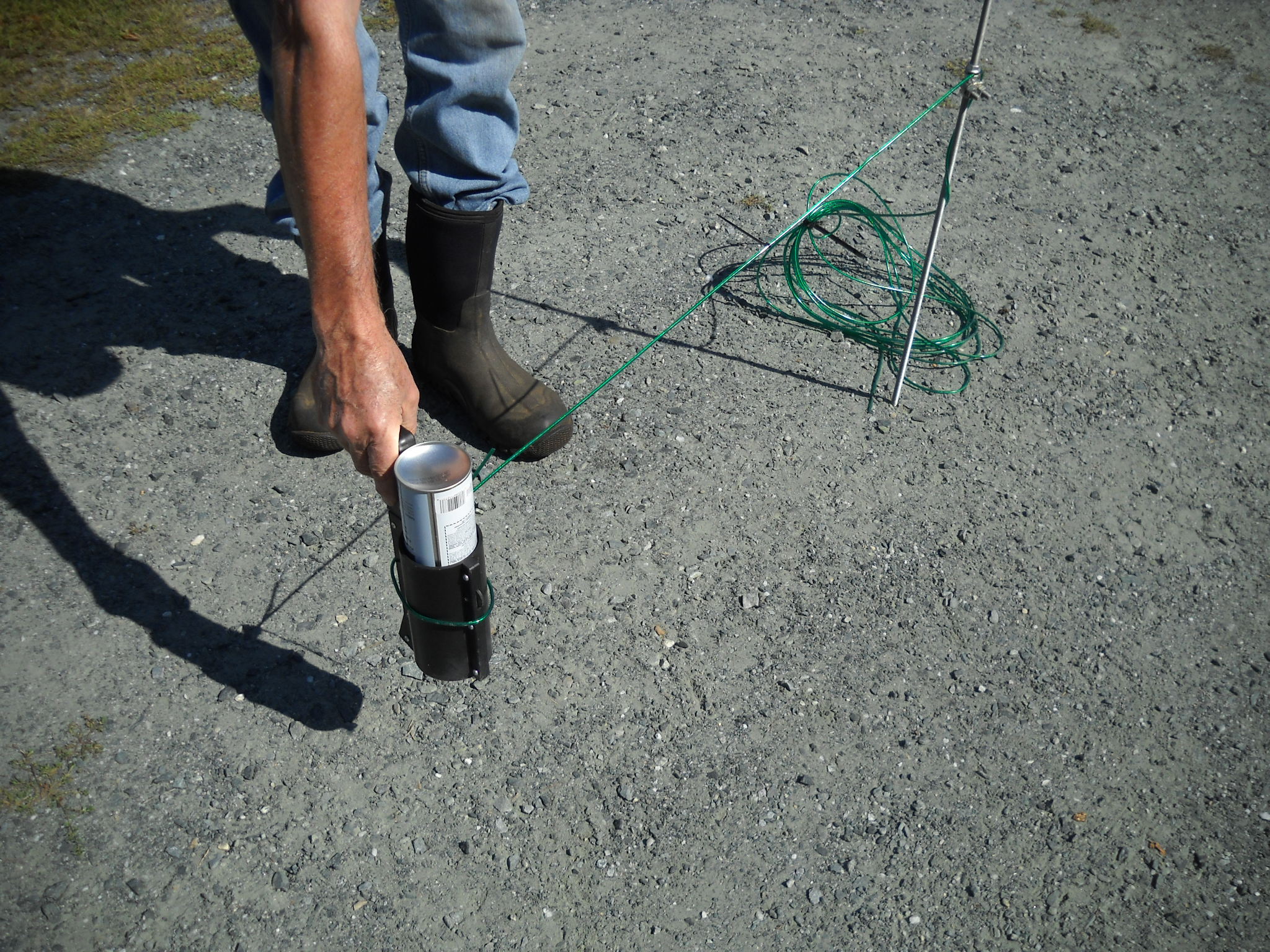
This summer the real work began. Once the grass was well established, Knox and a friend laid out the pattern. He used a device that holds a can of spray paint to mark out the lines. He used a long light-weight cable to define the circles. The spray paint in its holder was attached to one end of the cable, while the other end was looped over a stake in the center of the labyrinth.
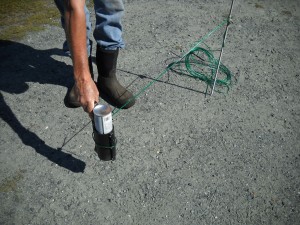
Paint for Labyrinth
Knox sprayed white paint while keeping the cable taut. The center of the labyrinth is a 4-foot space which eventually was surrounded by seven concentric circles, each 31 inches apart from the next. He had a design copied from the cathedral in Bayeux, France, and used stakes to mark turns in the walkway. He told me it really on took an hour or two to mark the lines.
Because of all twists and turns, that path to the center of the labyrinth is about 1,000 feet from the entrance. That amounts to a lot of stones needed to line the path. They used smallish stones, so 4 or 5 were used in every foot. But if you create your labyrinth you can use whatever size you want.
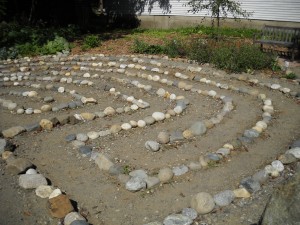
Universalist Church Labyrinth
Knox directed me to the Universalist Church in Hartland, VT, just half a mile from the labyrinth at harmony farm. Bryce Lloyd, a Boy Scout, built a lovely labyrinth near the church as his Eagle Scout project. Bryce used larger stones, and installed gravel instead of allowing grass to grow. I assume that landscape fabric was put down beneath the gravel to keep weeds out – though some weeds will persist no matter what, I fear.
Walking a full-sized labyrinth like the one at Harmony Farm takes 5 minutes or so. I find that walking one is an easy way to clear the mind and to forget for a few minutes the deadlines and worries of life. One moves forward, one turns back, one concentrates on the journey. I find walking a labyrinth very relaxing. I don’t think I will build one myself, but they are nice to visit and are more common than you might think.
Henry’s new book is out: Wobar and the Quest for the Magic Calumet from Bunker Hill Publishing. It is a chapter book for kids, a fantasy-adventure about a boy born with a mustache and a magical ability to speak to animals and understand them. Learn more at www.Gardening-Guy.com.

 Click Here to buy from Cobrahead