-

Now available for $24.95 including shipping. -

Now available for $21.00 including postage. Vendors I Like
 Click Here to buy from Cobrahead
Lilacs Care & Feeding
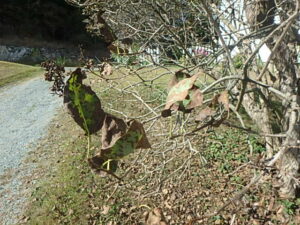
Lilacs have been plagued by blight this summer.
The most common question I am fielding is about lilacs: why have so many had their leaves turn brown and fall off early? We had a wet spring, ideal conditions for fungal diseases to thrive, and many are affected. The ultra-dry conditions of August stressed the lilacs, making them even more susceptible. But fear not: they should recover next year.
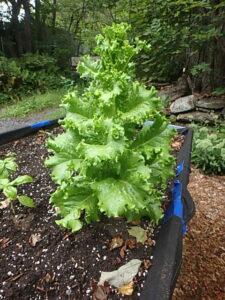
Lettuce did well
My vegetables did well this summer, as they loved all the sunshine. My soil is very high in organic matter, so it holds water well. My spring-planted lettuces were cut-and-come again varieties, so I ate good lettuce all summer. By cutting off heads instead of pulling them, the roots started up new plants which produced well. Now everything has bolted and I will leave a few to set and drop seeds. Those will start new plants in April, even when the soil is too wet for me to work it.
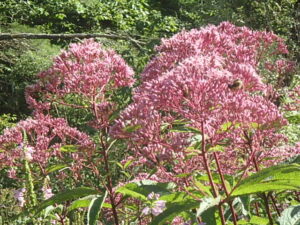
Joe Pye weed is a fall bloomer & provides nectar to Monarch butterflies
We all know that Monarchs need milkweed – but that is so their larvae will feed on the leaves and become toxic to birds. Adult monarchs do not feed on milkweed leaves, but right now they are enjoying feeding on nectar from goldenrod, Joe Pye weed and fall asters, among others.
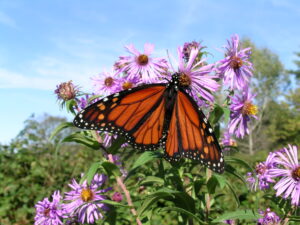
Monarch on New England Aster 1
If you haven’t got your seed garlic yet, buy some. We should plant garlic in October, but by then most seed garlic is gone. And harvest your potatoes soon – even if they haven’t blossomed (which is usually when we dig them). I got a great crop, due to all the sunshine.
Getting Ready for Summer: Lilacs and Grapes and Blackberries, Oh My!
I love spring. It brings warm weather and plenty of excuses to stop working on the computer and get outside. Here are some of my chores for this week and next: 1) Prune the grape vines while still dormant. 2) Clear out last summer’s fruiting canes from the blackberry patch. 3) Give some limestone to the lilacs. 4) Fertilize the bulb flowers.
Grapes bloom and produce fruit on new shoots. That means that you can prune them now, and not lose any grapes later on. In fact, if you do not prune them now, you will get less fruit- and a jumble of vines. Pruning stimulates new growth – and better yields.

Old grape cane showing shaggy bark (center)
Many people avoid pruning their grapes because the task seems daunting. Here is the key: this year’s fruit grows on new shoots, or canes, that grow on last year’s canes, not older wood. Last year’s canes are smooth and tan, while older wood is darker and has shaggy bark.
Each of last year’s canes needs to be shortened up so that there are just a few buds that will produce new canes this year. Buds are obvious if you look carefully: small protuberances on last year’s growth. Some grapes have buds close together near the base of last year’s canes. Others have them well spaced out, say a foot apart. In either case, you only need a few buds to produce this year’s fruiting canes. So in the first instance, you prune back hard, leaving just a short spur with a few buds. In the second, you need to leave last year’s cane longer in order to have an adequate number of buds (and hence, new fruiting canes).
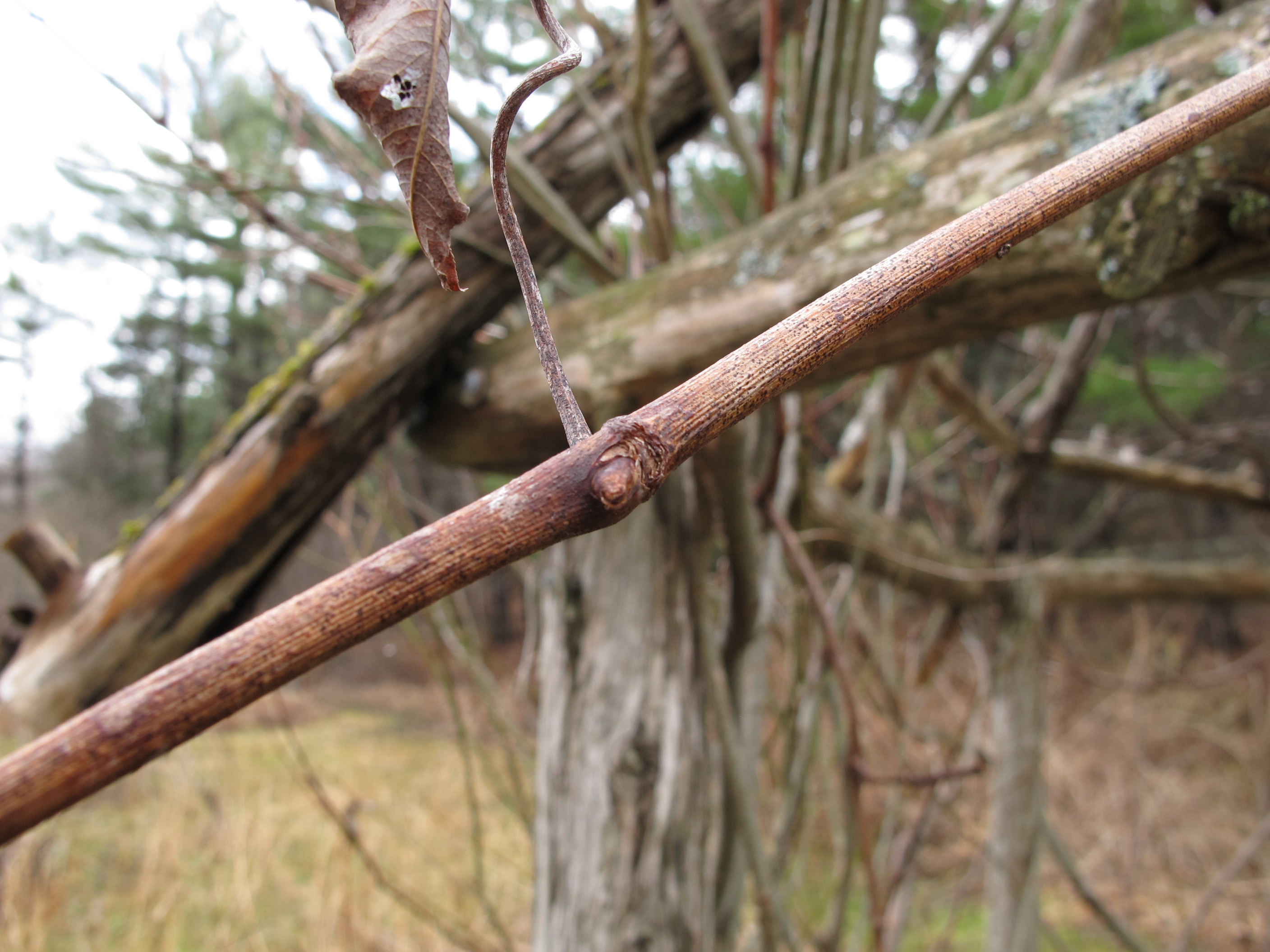
First year grape cane with bud
My friend Lewis Hill (1924-2008) wrote a nice book about pruning : Pruning Simplified. In it he warned that if you have an overgrown grape vine that has not been pruned in many years, you should spread out the work over a few years. The goal is to “get the vine back to a single trunk with four strong, well-spaced branches.”
Last year I worked hard at reducing the size of my blackberry patch and creating a pathway down the middle of the patch. It’s time now to do so again because blackberries are very vigorous and spread by root. A single row of plants can easily become 10 feet wide and virtually impenetrable unless worked on every year.
Blackberries produce fruit on canes that grew last year. Last year’s fruiting canes are dead, and need to be removed. Look carefully and it will become obvious what’s what. Last year’s canes are light brown and lifeless. This year’s fruiting canes are darker colored and covered with buds at this time of year. Your job is to cut off the dead ones at the base and remove them.
I use a pole pruner (an ARS brand) to cut off the canes, and then by gently squeezing the grips on the pruner, I use it to pull out the cut cane. This keeps me out of the blackberry patch – and without cuts or scrapes from the sharp thorns.
I use my lawnmower to control the spread of my blackberries. New shoots pop up in all directions, and each will grow into a new plant if allowed to grow. I have a row of blueberries 5 feet or more from the blackberries, and shoots regularly pop up amongst them. I put on heavy leather gloves and try to pull them up, roots and all. I put down a thick layer of wood chips on my walkway up the middle of my patch.
Conventional wisdom has it that March is the time to give lilacs some wood ashes or limestone to keep the surrounding soil near neutral. I disagree. You can do that any time of the year. March is just when of the past farmers cleaned out their wood furnaces and had the time to spread ashes. But now is a good time to do so if you haven’t already done so.
Lilacs do not flower well in highly acidic soil. Because we get acid rain, our soil tends to get more acidic each year unless we add something to counteract that acidity. I should note that I don’t add limestone or wood ashes to my vegetable garden because it is very high in organic matter, and is very biologically active. The microorganisms help keep the soil near neutral.
I sprinkle wood ashes around a mature lilac at the rate of 1-2 quarts per plant using a one-quart yogurt container or coffee can. I don’t bother stirring the ashes into the soil as the first rain will wash it in. Correcting the soil pH will not affect this year’s blooming, but will help next year. This year’s buds are already there and ready to bloom.
My last job this week is to sprinkle some organic slow-release fertilizer around my bulbs plants like daffodils. This will slowly enrich the soil and provide needed minerals to the bulbs so they will remain vigorous in years to come. I like to do it now because I can see where the bulbs are growing – in the fall the foliage will be long gone.
So get outside and get to work. We gardeners don’t get any time off now – or for that matter, until next winter. It’s what keeps us young!
Henry Homeyer may be reached at henry.homeyer@comcast.net. His Web site is www.Gardening-guy.com. Henry lives and gardens in Cornish Flat, NH.