• Wobar and the Quest for the Magic Calumet
    Now available for $24.95 including shipping.
  • Now available for $21.00 including postage.
  • Recent Articles

  • Vendors I Like

    click here to buy from Cobrahead Click Here to buy from Cobrahead
  • Cobrahead

    This is the best darn weeder made in the country, and I think I've tried them all. I use it to dig weeds, tease out grass roots, and mix soil at planting time. Neither right nor left handed, it is lightweight and strong.
  • West Lebanon Supply

    I buy all of my organic fertilizers and soil amendments at West Lebanon Supply. They carry several lines of seeds, watering devices, tomato cages, landscape fabric and much more. They also sell pet supplies - and allow dogs in the store!
  • E.C. Brown Nursery

    E.C. Brown Nursery has an amazing selection of high quality trees, shrubs and perennials. The staff is incredibly knowledgeable. Looking for something unusual? E.C. Brown Nursery probably has it.

Getting Ready for Winter and More


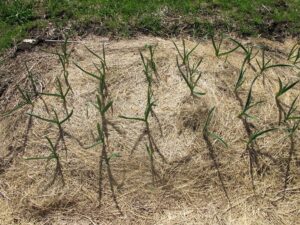
Garlic grows through th mulch, shown here in May

After a hot, dry summer – there was a drought in most parts of New England – we had a very early frost this year, September 20. Not enough to kill our late potato vines, but enough to kill squash and dahlias. I was caught off guard. I am now getting ready for winter.
 
It is important to clean up the vegetable garden well to avoid overwintering diseases. Pull your squash, cucumber and tomato vines and compost them well away from the vegetable garden. I have a compost pile for noxious weeds and grasses, and for plants that harbor fungi. That compost never gets hot enough to kill weed seeds or diseases, but it disposes most of the organic material at home, rather than sending it to the landfill.
 
After pulling the plants in the vegetable garden, I weed carefully and then hoe up the mounded beds with soil from the walkways and add a layer of good compost. Finally, I mulch planting areas well to keep weeds from starting in early spring, before I plant. Fall leaves are fabulous mulch: they inhibit germination of weeds, prevent soil erosion, and add good organic matter and minerals to the soil.
 
Although many gardeners chop up their fall leaves with a bagging lawnmower, I usually don’t. I just rake them onto to tarp and spread them over the vegetable beds. Will the leaves blow away? A few might, but after the first good rain they compact and settle in for a good winter’s nap. If I have more than I need for the vegetable garden, I run them through my chipper-shredder to reduce their volume and store dry in big barrels. This stuff I use in flower beds in the spring. Plants love it!
 

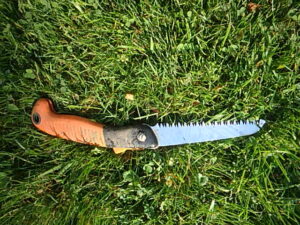
This folding saw will easily cut down tough stalks of big perennials

We have an exorbitant number of flower beds so it’s a lot of work to cut back perennials and get out any late-season weeds. Here are a few tips:

 
  1. Use a serrated knife or folding pruning saw to slice off multi-stemmed plants like daylilies. Grab a handful of foliage and with one swipe, they are all ready for the wheelbarrow.If that method is not for you, how about using hedge shears or even a weed whacker to cut down big expanses of flower stalks?
  2.  I have my pollinator or “Darwin” bed which gets no weeding – it has filled up with tall plants that fight it out for space: phlox, fall asters, goldenrod, Joe Pye weed and obedient plant. I leave it until spring to clean up, as it provides good places for beneficial insects to overwinter.
  3. We have a lot of hostas, and I wait to clean up until hard frost has killed the tops. Then I can either just grab the mushy leaves and pull them off, or use a rake to do the work.
  4. As for weeds, we don’t have many. The flower beds are weeded early in summer, and then well mulched. But I use my favorite tool, the CobraHead weeder, to remove any late season invaders. It is able to get under weeds, loosen the root, and get them all out.
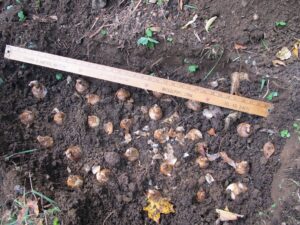
Now is the time for planting bulbs. To save time and energy, don’t plant them one at a time. For 25 daffodils I excavate an oval 30 to 36 inches long and 18 inches wide and 8 inches deep. I put good soil in a wheelbarrow or a tarp, and rocks and heavy clay or poor soil in another. I put about 2 inches of good soil in the bottom and mix it up with some bagged organic fertilizer or bulb booster. I nestle the bulbs into that mix, and cover with good soil or soil and compost mix. Bulbs need good drainage and reasonably good soil.
 

Daffodil bulbs planted in a 36-inch oval hole, ready to cover with soil

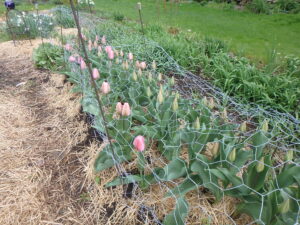
Daffodils last many years – tulips less so. I plant 100 tulips just 3 or 4 inches apart in rows 8 inches apart in my vegetable garden once it is cleaned up, and use them for cutting and putting in vases and for giving away. I generally pull the bulbs after cutting in the spring, but one year I kept 50 or so and replanted in the fall. The following spring they bloomed, but were shorter and smaller. Since deer love tulips I can use chicken wire vertically along the sides of the bed to keep them away, come spring.
 
I plant garlic in mid-to late-October each year, mainly using garlic I grew the year before, but sometimes buying new varieties to try. I plant once the soil has chilled as they may start growing this fall if planted in warm soil. That’s not awful, but I prefer to avoid it. I plant garlic 3 inches deep, 4 inches apart in the rows, and rows 8 inches apart. I give them a little organic fertilizer at planting time, and cover with a 6 to 10 inch layer of mulch hay or straw. They’ll grow through it next spring, but most weeds will not.
 

Tulips protected from deer

I prune some trees and shrubs in October, too. You really can prune any month, but once leaves are down it is easier to see their stems and look for crowded areas, crossing or rubbing branches, and dead branches to remove. To identify dead branches, just rub the bark with your thumbnail. If it shows green, it’s alive, if not, it’s dead. Prune so sunshine can hit every leaf and there is good air circulation.

 
So don’t walk away from the garden now and say, “I’ll get it next spring.” Get those weeds now. The more you do, the easier it will be next spring.
 
Henry can be reached by e-mail at henry.homeyer@comcast.net.