-

Now available for $24.95 including shipping. -
Now available for $21.00 including postage. Vendors I Like
 Click Here to buy from Cobrahead
Looking Back on 2025, and Forward to 2026
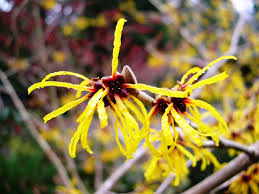 Each year I plant a few more trees and shrubs, even though my list includes over 100 different kinds that I have planted since I bought my house in 1970. Last spring I planted a spring-blooming witch hazel, one called ‘Arnold’s Promise’. I’ve had the native witch hazel for decades – they bloom late in the fall with lovely yellow blossoms. This new one is a Zone 5 tree, only hardy to minus 20 F. I’ve been in a Zone 4 area for decades, but have been trying Zone 5 trees for the last few years, and they have all survived our winters. Hopefully, “Arnold” will, too.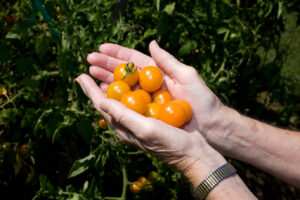
Sungold cherry tomatoes
Looking ahead, I will soon be studying the catalogs and websites of my favorite seed companies. It’s good to order seeds now, as some popular seeds will sell out – especially small packets of tomato seeds of things like ‘Sun Gold’, my favorite cherry tomato.
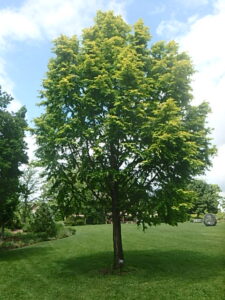
Young dawn redwood at New England Botanic Garden in Boylston, MA
Although we have large populations of native plants that support pollinators and birds, in 2026 I hope to locate and plant a wider diversity of plants. I am on the list to get the Massachusetts Master Gardener on-line newsletter called The Dirt. In the January issue it lists native plants that are important to support our pollinators that are “at risk” and declining in numbers.
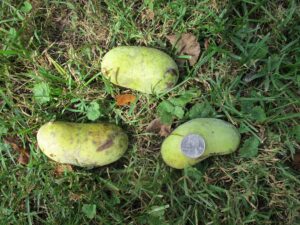
Pawpaw fruit has a tropical flavor but a texture that is mushy.
Last year my friend Mark planted five little pawpaw trees that he got from another friend. Pawpaws send up lots of root sprouts, but they will not produce fruit if they are genetic clones (all from a single mother tree, as his probably are). I have some from another source, so he’ll trade me one of his for one of mine. Most small trees move easily. Pawpaws are a native tree common in Appalachia, but hardy here. Their fruit tastes tropical!
Putting Food By
It’s a rare gardener who doesn’t grow at least a few tomatoes. We all love them. I eat them at least twice a day in season, and sometimes I even have one with breakfast. But the season is short, so many of us try to put up tomatoes to have their flavor in winter soups and stews. Our grannies slaved over a hot stove in August and September, canning tomatoes. But have I found freezing them is much easier.
Here’s what I do: I freeze whole tomatoes in zipper bags. I don’t blanch them or remove the skins. All I do is place clean fresh tomatoes in a gallon freezer bag and suck out the air with a straw, sliding out the straw and pinching the bag shut as I do so.
When I want to cook with a tomato, I hold a frozen one under the tap, run hot water over it while rubbing it, and the skin comes right off. I set it aside for a few minutes, then chop it and put in the stew pot. I know it is chemical-free and harvested at peak ripeness. I sometimes freeze cherry tomatoes, and those I toss into the pan with skins on.
In winter I long for tomatoes for my noon sandwich. I’ve found that roasting tomatoes first, then freezing, is a good way to have a substitute for fresh tomato in a sandwich. I thickly slice tomatoes and roast them at 350 degrees until they have given off most of their moisture and caramelized nicely. Then I carefully place them in gallon freezer bags in a single layer. When I need a few slices, I break off the frozen slices and put them in my toaster oven on aluminum foil. I heat them at 350 until thawed. They are not the same as fresh, but they’re the best substitute I’ve found.
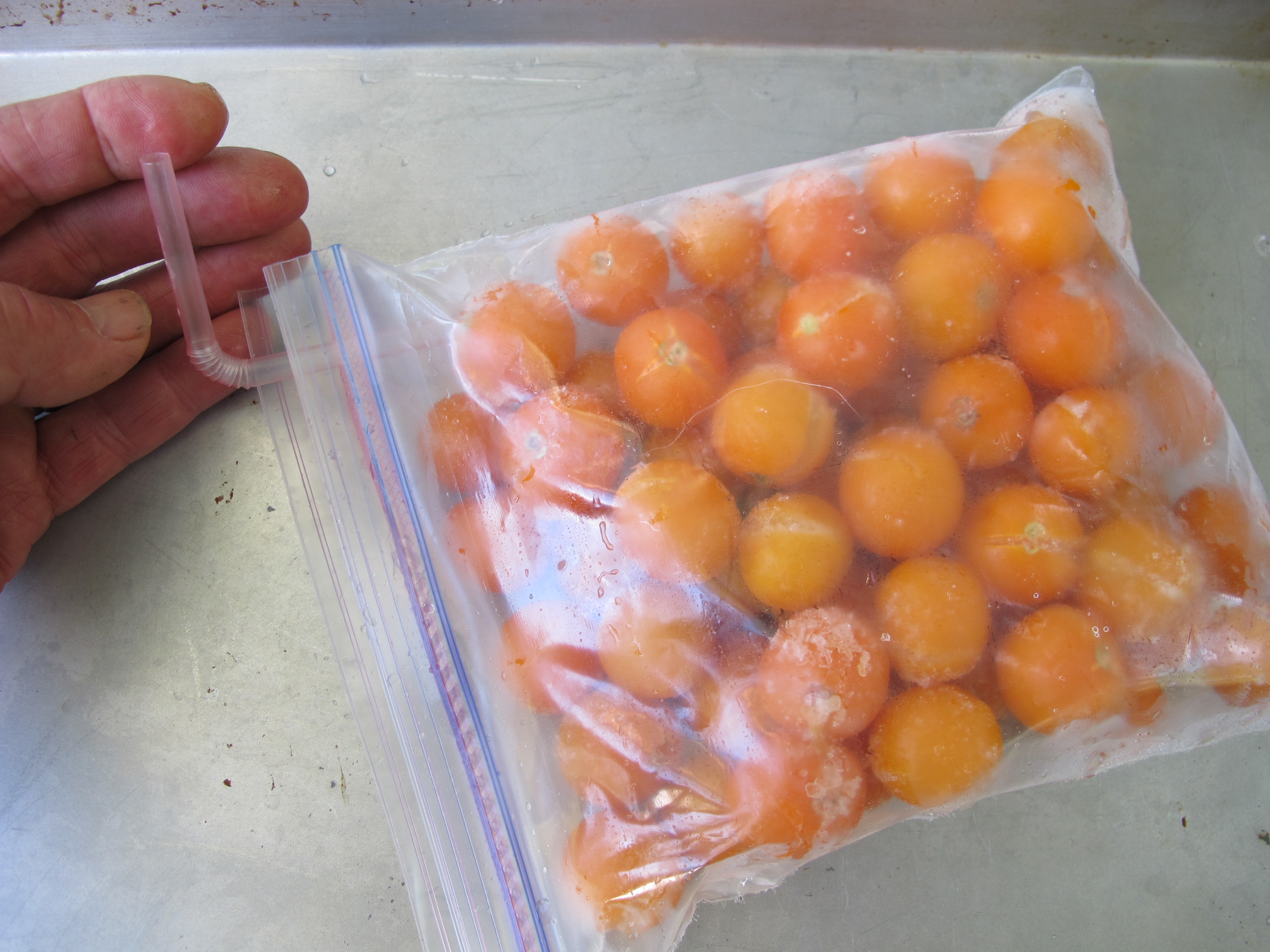
A straw used to remove air from a bag of cherry tomatoes
Cherry tomatoes are highly prolific, and I generally have 10 plants or more. Although I eat plenty like candy, right in the garden, I obviously have more than I can eat in August and September. So I cut each in half, and put them in my food dehydrator. I set the thermostat at 125 or 130 degrees, and dry them for 18 to 24 hours, depending on water content and the ambient air’s humidity.
Food dehydrators are great for drying tomatoes, apples, pears, hot peppers and more. My favorite is the Excalibur. It has 9 trays, each 15 inches square, and a fan and heater. It uses 660 watts of electricity per hour, which is less than the 1000 watts used by my previous favorite, the NESCO American Harvester. The Excalibur blows sideways across the trays so everything gets dry at the same rate; the NESCO dehydrator blows from the top or the bottom, and one must rotate the trays to get even drying. The trays near the heater dry quickly, those farther away more slowly.
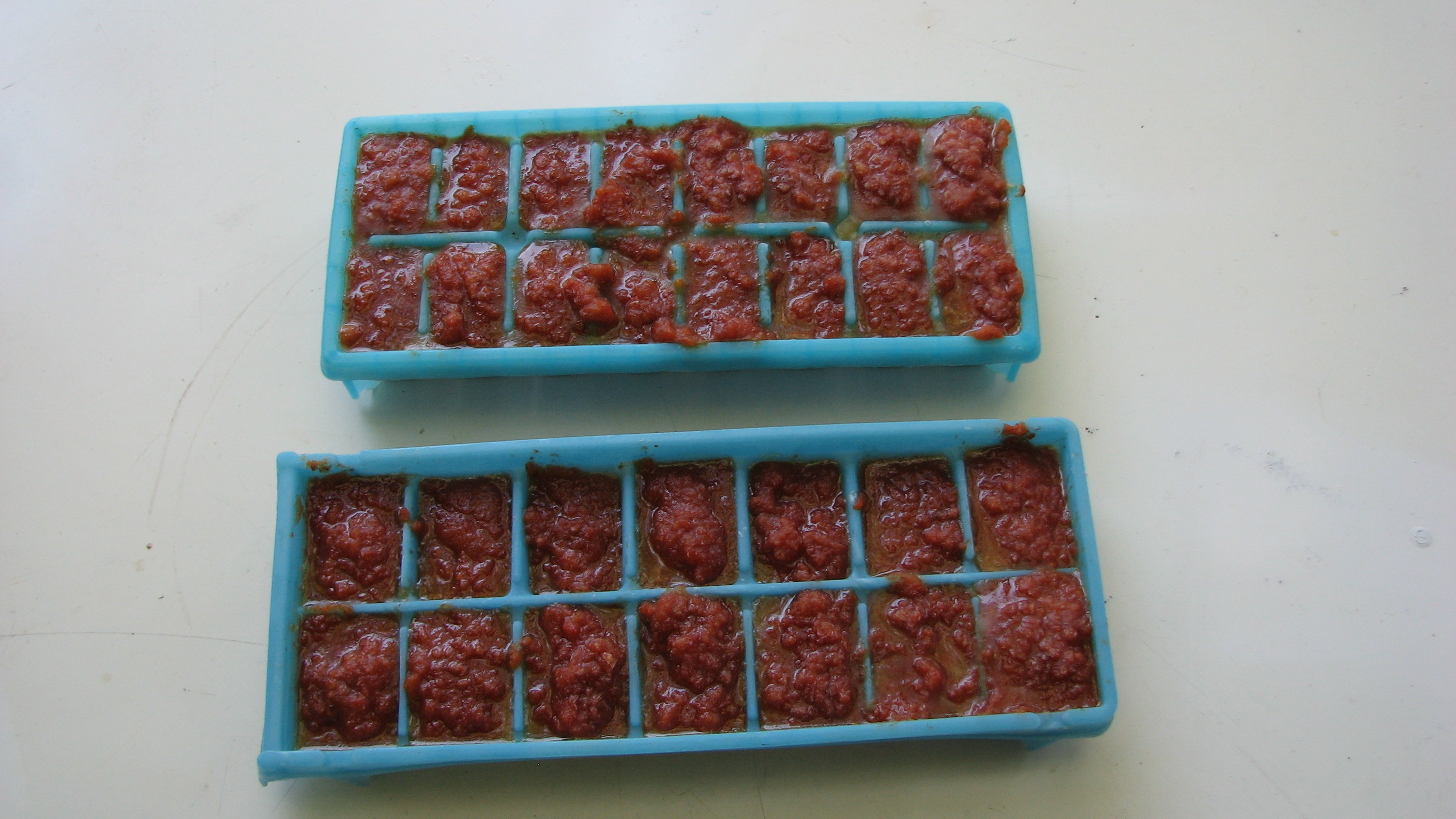
Tomato paste
I also make a lot of tomato paste. To do this I core full-sized tomatoes over the sink and squeeze out seeds and excess juice. Then I cut them in half and toss them in the food processor, which I use to puree them into a thin gruel. I cook the pureed tomatoes in a big enameled cast iron pot at low heat until the contents are thick enough so that I can stand up a spoon in the pot. It takes 2 to 3 hours of cooking to make paste.
I let the paste cool all night with the pot lid off, so more moisture evaporate by morning. Then I spoon the paste into ice cube trays and freeze them. When hard, I take the cubes out and put in freezer bags. One cube is a very nice quantity to add to a soup or stew. By freezing the paste in small units, there is no can of tomato paste left in the fridge to go moldy and blue. No odd flavors picked up in the fridge, either.
I also make spaghetti sauce. Not much, but I like to have some ready for a quick meal in March. I sauté onions, garlic and fresh green peppers to start with. I add fresh basal, marjoram and parsley from the garden. And of course tomatoes, black pepper and a touch of salt. I can one batch in quart jars each summer – 7 jars – and freeze more in quart yogurt containers. Canning must be done properly, cooking the sealed jars for a long time.
But if you don’t grow enough tomatoes to put up all of them you want for winter, don’t despair. Most farm stands take orders for tomatoes by the bushel at a very reasonable rate, much less than the per pound rate. So when the late blight nailed my tomatoes some years ago, I bought a bushel from a farmer and put them up.
I don’t generally grow a lot of peppers, so I often buy a half bushel of green, yellow and red peppers. I clean and slice them, and freeze in zipper bags. I find they freeze so well that I can even add them to a salad, and having 3 colors of peppers makes a very attractive winter salad. Put them in the salad right out of the freezer and eat soon after.
Gardening is fun, even the weeding. But eating the garden produce is even better. Fresh is best, but come winter, anything is good!
Henry is a gardening consultant and garden designer. He is the author of 4 gardening books and a children’s chapter book. His website it www.Gardening-Guy.com